The 15% tariffs and geopolitical tensions frighten the markets: US futures in the red, crypto follows, the dollar loses ground, and gold rises
The Supreme Court’s ruling provokes a reaction from Trump, who introduces global tariffs at 15%. Meanwhile, the United States continues to mass its military fleet in the Mediterranean: is an attack on Iran getting closer? Investors, playing it safe, enter risk-off mode: fleeing from the most volatile assets in search of stability. Here is the situation.
Tariffs and Iran: the macro context
The spark that made the markets lose their nerve has a name: Donald Trump. Indeed, while the potential military escalation in Iran, and the ensuing uncertainty, have occupied the front pages of newspapers for weeks, the move that triggered the sell-off comes from the White House. What happened?
Trump did not appreciate the US Supreme Court’s ruling
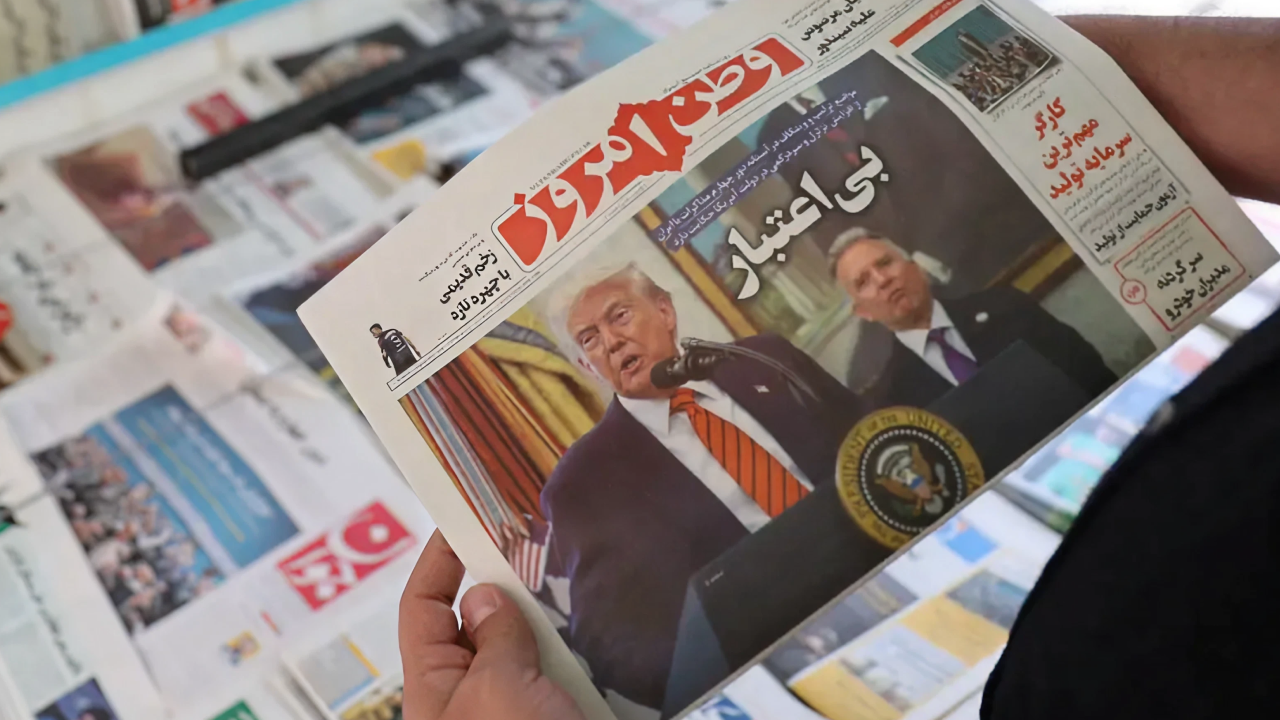
The news arrived on Friday, February 20 like a bolt from the blue: according to the US Supreme Court, most of the tariffs imposed by Trump are illegal. The President of the United States, obviously, did not appreciate the ruling and declared that he already has a “backup plan” ready: more tariffs.
The occupant of the White House, on the immediately following weekend, introduced additional 10% global customs tariffs, only to raise the stakes by increasing the threshold to 15%. On his social media platform Truth, Trump literally wrote: “I, as President of the United States of America, will immediately raise the global tariffs by 10% applied to countries – many of which have ‘robbed’ the United States for decades, without suffering consequences (until I arrived!) – bringing them to the 15% level, a threshold fully permitted and confirmed in legal venues.”
Investors in risk-off mode
This combo caused a sharp shift in sentiment: we have entered a phase of strong risk-off, where capital exits very quickly from assets considered volatile or risky to seek safety in traditionally more stable havens.
To give an example, the Fear & Greed Index – the index that measures the fear of crypto investors – is currently sitting at 5, “Extreme Fear”. Conversely, and by the book during geopolitical crises, gold scored a +3% starting from Friday the 20th, returning above $5,000/ounce.
Market update: equities and crypto numbers
On Wall Street, the picture seems clear even at the time of writing, before the stock markets open: Dow Jones futures are down 0.3%, while those on the S&P 500 and the Nasdaq 100 are losing 0.3% and 0.4%, respectively.
The price of oil is also feeling the impact: Brent futures are down 0.5% to $71.2 a barrel, while WTI – the US crude – stands at $66.11 a barrel, down 0.6%.
The crypto market follows suit: in the last few hours, the total market cap of the sector managed to shed over $100 billion in two days, only to recover half of it on Monday. Bitcoin recorded a heavy drop of about 5.5%, touching $64,300 but bouncing back and settling, for now, around $66,300.
The situation regarding liquidations is very interesting: about $468 million in long positions were liquidated between Sunday and Monday. But that’s not all: a single trader saw a whopping $61.5 million go up in smoke in a single trade.
Two more pieces of side info, between Ethereum and Nvidia
Let’s close with two news items that could cause further repercussions on the market, given their relevance.
First of all, the on-chain data tracked by Lookonchain indicate a movement that, generally, the community doesn’t like very much, to put it mildly: Vitalik Buterin, the founder of Ethereum, has gone back to selling ETH. Over the weekend of February 21-22, Buterin sold 1,869 ETH, cashing in more than $3 million. Ethereum, during those same hours, dropped by up to 6.4%, even pushing below $1,850.
Finally, on Wednesday, February 25, Nvidia will publish its highly anticipated quarterly earnings. The reason behind the importance of these numbers should be clear to the whole world: Nvidia is not just a tech company, it is the engine of the entire narrative linked to Artificial Intelligence and, by extension, of the US stock market over the last two years.
If the data were to disappoint and fail to beat the very high forecasts of analysts, the event could trigger a further wave of volatility, dragging down with it the tech sector in general, cryptos included.
What will happen in the coming months? Impossible to say, easier to report on: sign up for Young Platform to stay up to speed!