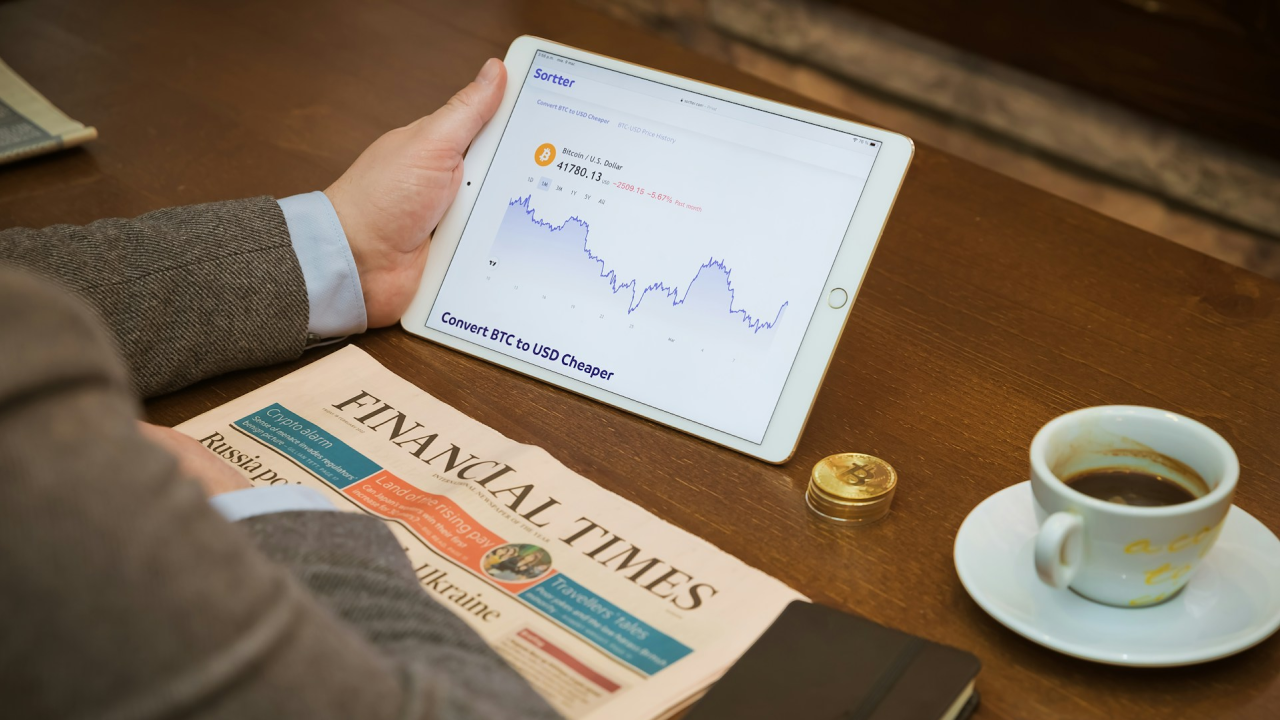
Where to invest today? Have strategies changed?

Where to Invest Today? Have Strategies Changed?

The current portfolio must take into consideration that the world has changed, and with it, the investment strategies too. How to move?

Investing today means conceiving and building an investment portfolio as a tool that can withstand external shocks without capitulating: in two words, it should be diversified. Until a few years ago, there were precise, shared guidelines used as a reference in the financial planning process. Today, the situation has changed. What to do?

Why should investment strategies be rethought?

The world has completely changed in the last 5 years. Since at least 2020, we have been witnessing a series of events that are overturning the established order to which we were accustomed.

Everything we took for granted and considered immutable regarding military interventions, geopolitical alliances and economic agreements is evolving towards a new arrangement. To put it briefly, we might have reached the end of the line for the phase of absolute globalisation, which began with the dissolution of the Soviet Union in 1991.

The basics: where does it all start?

We could place the starting point of this apparent change process in the period between 2018 and 2022. Over the past five years, three historical events contributed to changes in past balances: the trade war between the United States and China, the COVID-19 pandemic, and the Russian invasion of Ukraine.

The trade war between the United States and China

In March 2018, in fact, the American administration led by Donald Trump imposed 25% tariffs on about $50 billion in goods imported from China, following a report by Robert Lighthizer, US Trade Representative, that denounced certain unfair trade practices by the People’s Republic. The latter, naturally, responded and imposed tariffs on 128 strategic American products.

This initiated a trade war that revealed the criticalities of a super-connected system, perhaps too dependent on Chinese manufacturing: the deterioration of relations coincided with the supply chain crisis. Furthermore, the clash of tones between the two leading world powers, which embodied – and still embody – two opposing economic and political systems, contributed to the re-emergence of polarisation dynamics typical of past eras, especially the Cold War period. Chancelleries around the world returned to asking themselves an old question: which side to take? United States or China?

The Covid-19 pandemic

We arrive at 2020: in February, it is an epidemic, in Jun, it is a pandemic. COVID-19 blocks the world. Leaving iconography aside, the prolonged lockdown exacerbated supply chain problems that had emerged over the previous two years, besides immobilising national production: as Statista reports, the global Gross Domestic Product (GDP) contracted by 3.4% or, in dollars, by 2 trillion. Obviously, financial markets also took the hit: the Dow Jones (DJI) – the most important index in the world – lost about 35% from mid-February to mid-March. In the same period, Bitcoin fell from $9,970 to $5,300, a 46.6% decline.

As we know, both GDP and markets recovered from the blow with a sensational rebound: from that moment to today, the DJI has gained 144%, the S&P500 187% and Bitcoin 2,100% (a percentage that rises to 3,130% if we consider the ATH at $126,000).

Info on the first vaccines began to circulate, collective panic reduced, and confidence returned to acceptable levels. But above all, governments around the world flooded their respective economies with an infinite amount of liquidity and fiscal stimuli.

Taking into consideration only the three leading economic powers, the United States ratified the CARES Act for 2.2 trillion dollars, China approved a plan for 3.6 trillion yuan (about 500 billion dollars) and the European Union put in place a series of interventions – the most important being the PEPP (Pandemic Emergency Purchase Program) and NextGenerationEU – for a total of almost 2 trillion dollars. To this, one must add the various economic policy measures aimed at reducing the cost of money, such as low interest rates, quantitative easing, and so on.

Today, in the US alone, the M2 Money Stock, i.e., the total quantity of dollars in circulation in the real economy, has reached 22 trillion, up from 15.4 trillion in February 2020. At this point, a serious problem began to spread through the corridors of central banks worldwide. A problem to which we devote a lot of time: inflation. But the “best was yet to come”.

The Russo-Ukrainian War

February 2022: Putin’s Russia invades Ukraine; it is the perfect storm. Passing over the humanitarian issue, which, whilst central and very grave, is not the target of our article, the Russo-Ukrainian War is considered the decisive catalyst: its outbreak coincides with the conclusion of that period of apparent peace and free movement of goods made possible by American-style globalisation.

Russia and Ukraine were vital nodes in global trade before the war. Suffice it to say that, together, the two countries accounted for about 30% of global exports of low-cost wheat and cereals, while Russia was one of the leading European suppliers of gas and held a prime position in the worldwide supply of fertilisers, necessary for agriculture.

With the war, all this ceases to exist. The conversion of the Russian and Ukrainian economies to war economies creates significant structural difficulties in both countries, as they no longer produce at pre-conflict levels and fail to meet demand. Furthermore, supply chains are now politicised: before, one bought where it was convenient; now, one tries to buy from allies, even at higher prices (sanctioning enemies). Finally, the damage and strategic blockades of logistics infrastructure – such as the Ukrainian Black Sea ports– constitute a permanent impediment to resource access.

The current state of affairs

Some of the pillars that made the creation of an interconnected and efficient global economy possible have definitively collapsed, such as the constant availability of low-cost raw materials, international transport at negligible costs and logistics security, i.e., the certainty of receiving goods without interruptions or delays. In a few words, it is the end of the JIT (Just-In-Time) model.

The paradigm has changed. Priority is security of supply, not efficiency, also by virtue of the politicisation of supply chains mentioned earlier. The most recent example is China’s decision to limit access to rare earths on a discretionary basis, to which Trump responded by imposing 100% tariffs. The emergency “subsided” in a few days, but these tensions led to liquidations worth billions of dollars.

Inflation becomes a persistent problem insofar as it is systemic, also because it is imported, i.e., upstream: if before the baker sold bread at five. He paid bills at two and flour at 1, keeping another 1 for himself. Now he pays bills at three because he can no longer avail himself of low-cost Russian gas, flour at two, and is forced to raise the final price to earn 1.

In Italy, for example, from 2004 to 2021, prices grew at a slow and steady pace: as Pagella Politica reports, over 17 years, the increase was 28%, with an annual average of 1.5%. Only in 2022, however, the general price index rose by 11%, then fell to 8% in 2023 and returned to 2% in 2024. Put another way, to use the words of the research authors, “little less than half of the increase accumulated in twenty years was therefore concentrated in just three years”.

Now that we have a clear picture of the transformations underway and their causes, it is time to answer the central question.

Investing today: what is necessary to consider?

In the current world, the primary variable to consider when building a portfolio, as we have seen, is high inflation, now a constituent element of our economic system.

In the past, in the world of investments, one “rule” in particular influenced the art of diversification for a very long time: the famous 60/40 portfolio. In two words, this established that the perfect portfolio should be composed of 60% equities and 40% bonds.

The reason is simple: the negative correlation between the two asset classes. This is because, in the “old world”, during periods of economic growth, shares performed better than bonds and, conversely, in moments of recession, bonds compensated for the losses of shares. In this historical moment, however, the 60/40 portfolio is no longer valid.

Shares and bonds are increasingly correlated, and the latter are reportedly gradually losing their status as havens – safe havens to preserve capital – in favour of other assets.

Inflation, in fact, constitutes a big problem for bonds, for at least two reasons: firstly, investors holding them receive fixed interests, or coupons, in return, which are proving unsuitable for protecting capital from the loss of purchasing power; secondly, with such entrenched inflation, central banks are forced to keep rates high causing, ultimately, a descent in the value of bonds.

To give an example, let’s take TLT, an ETF that allows investors to expose themselves to US government bonds with maturities exceeding 20 years: from its launch in 2002 until 2020, TLT performed exceptionally well, growing slowly but steadily, scoring approximately +100%, with the ATH precisely in the first week of March 2020. From that moment, however, a sensational decline began: from April 2020 to today, this ETF has lost more than 40%. If you had invested in TLT at day zero in 2002, you would have earned a scant 10% today.

Where to invest money today?

Naturally, before starting this section, it is necessary to remember that what you will read here is not investment recommendations or financial advice, but only considerations stemming from reading expert opinions.

That said, an interesting analysis comes from within the walls of Goldman Sachs, more precisely from the section dedicated to market analysis, Goldman Sachs Research. In the study, consistent with what has been written so far, one reads that a strategy of “passive acceptance”, such as investment in global indices (World Portfolio), might no longer be so functional. On the contrary, the so-called Strategic Tilting might be more suitable, literally “Strategic Inclination”, i.e., the almost active management of one’s portfolio to safeguard oneself from current vulnerabilities – inflation primarily.

Doing Strategic Tilting, therefore, means diversifying but in a conscious way. A simple metaphor that helps us understand the concept comes from the culinary field.

Imagine wanting to prepare your favourite cake, the one grandmother taught you as a child when you came home from school. Well, grandmother’s recipe, with the quantities and cooking times, worked perfectly with grandmother’s home oven. Your oven, however, heats up more.

It is a variable you must consider; otherwise, the cake will turn out very different and perhaps burnt. Therefore, you weigh the ingredients so that the problem with your oven is minimised: of the 500 grams of flour, you remove 50 grams and replace them with another 50 grams of starch to soften.

Now, your grandmother’s classic recipe is the global index, which worked perfectly with the old oven (the “old world”). The new oven, however, is more powerful – the macroeconomic context is different, and inflation is structural. For this reason, you changed the ingredients or, in financial terms, you actively managed – but not too much – your allocations, so that the cake (the investment) can perform at its best. This is Strategic Tilting.

The analysis, in this regard, identifies five macro-areas to mitigate risks.

  1. Protection against inflation: the 60/40 portfolio, as we have seen, struggles to preserve capital amid the inexorable erosion of inflation. For this reason, experts from the Research section explain, it is necessary to rebalance it by increasing exposure to tangible assets – real estate, raw materials and natural resources – and gold. In this regard, the Chief Information Officer of Morgan Stanley, Mike Wilson, believes that the noble metal should weigh at least 20%.
  2. Protection from the end of United States dominance: new powers challenge US leadership daily, with China in the lead. For this reason, non-US shares deserve greater attention when planning a medium- to long-term strategy.
  3. Protection from the weak dollar (Pt. 1): the cause and at the same time the consequence of the second point. If the United States lost leadership, the dollar would cease to be the centre of world finance. The argument also holds in reverse: if dedollarisation gained strength, the USA would cede command. In light of this, emerging markets, which have historically been negatively correlated with the dollar, could represent a lifeline.
  4. Protection from the weak dollar (Pt 2): To protect oneself from this phenomenon, it also makes sense to reduce exposure in USD and start looking towards other shores, such as the euro or the Swiss franc.
  5. Protection against volatility: US Tech shares, which carry significant weight in the S&P 500 and Nasdaq, are highly volatile. For example, NVIDIA’s quarterly reports moved the stock by 8% in one day – from +5% to -3% in one session. In this sense, low-volatility shares can attenuate shocks: utilities (companies that provide public utility services) and healthcare (public health).

Have strategies changed?

To answer the opening question: yes, strategies have changed. New investment paradigms, to be in step with the times, should incorporate parameters that can no longer be ignored. Many schools of thought propose different approaches. The common denominator, however, is one: the 60/40 portfolio, the maximum expression of a world now passed, might no longer be the cure for all ills.

The United States, China, and crypto liquidations: what happened?

The US, China and crypto liquidations: what happened?

Weekend of terror: fears of a new trade war between the US and China led to more than £19 billion liquidated in the crypto market alone. Analysis

The weekend of 10, 11 and 12 October was particularly difficult: the United States threatened tariffs of up to 100% on Chinese imports, set to take effect on 1 November. Naturally, such news caused panic among investors worldwide, and major financial markets, both traditional and non-traditional, suffered heavy losses. In particular, the crypto world witnessed its largest-ever liquidation: £19.16 billion. What caused this shock? Here is the analysis

The trade war between the United States and China 

The trade war between the United States and China, as we know, has been ongoing for years: the world’s two most powerful trading economies have been clashing over this issue, alternating between hostile statements and reasoned ‘truces’. However, in recent months, the negotiations have taken on a harsh tone, to say the least

In particular, since that fateful 2 April, also known as Liberation Day, the two sides have intensified their confrontation, with extremely high reciprocal tariffs – up to 145% – and truces with deadlines repeatedly postponed. Recently, however, the situation seemed to be returning to normal, with the United States and China apparently indicating they wanted to continue negotiations in a more collaborative spirit. But in the second week of October, Beijing reignited tensions.   

The trigger

On Thursday 10 October, the People’s Republic announced its intention to impose restrictions on the export of rare earths, over which it has a virtual global monopoly: according to the CSIS (Centre for Strategic and International Studies), China controls 60% of the production and 90% of the processing of these minerals, which are extremely strategic as they are fundamental to the technology (artificial intelligence in particular), energy and defence sectors. 

To be more precise, the breaking point can be attributed to the Beijing government’s decision to grant licences for certain types of chips on a ‘case-by-case’ basis. What does this mean? To understand this, we need to take a brief step back and clarify the dynamics of exporting rare earth materials. 

As we wrote a few lines ago, these goods are valuable because they are irreplaceable components in the manufacture of chips and semiconductors, elements that are fundamental to a nation’s technological and energy development. They are, therefore, goods subject to restrictions, as they are closely linked to national security: by depriving itself of them, China would effectively allow its rivals, led by the United States, to gain a competitive advantage in these sectors

With these restrictions, which in theory should come into force on 1 December, the Celestial Empire intends to transform a natural resource into a geopolitical tool. In this way, the Chinese Ministry of Commerce (MOFCOM) will be able to decide, on a case-by-case basis, whether to issue export licences based on several discretionary factors, including: who is the company or entity receiving the materials? For what purpose? Does the export pose a potential risk to Chinese national security? And so on.

The US reaction: the straw that broke the camel’s back   

Upon hearing the news, Donald Trump wasted no time, immediately publishing a long, fiery post on Truth in which he essentially stated that he did not like this behaviour. The text ends with a not-so-veiled threat of equally harsh retaliation by the United States. And so it was.  

The following day, Friday 10 October, the US President wrote on his Truth social media account that ‘the United States of America will impose a 100% tariff on imports from China, in addition to the tariffs already in place’ and that ‘from 1 November, we will impose export controls on all critical software, without exception‘.

For the sake of completeness, we would like to point out that, at the time of writing, Trump has shown a willingness to reconcile with Chinese Supreme Leader Xi Jinping. The latter, writes the POTUS, “was just going through a difficult time,” adding, “don’t worry about China, everything will be fine” because “the United States wants to help China, not harm it.”

Now that we have a clear understanding of the initial context, it is time to look at the figures and graphs to get an idea of what may have happened: how did we get from tariffs to £19.16 billion in liquidated damages? Let’s take a look together. 

How did the markets react?

To answer this question, we will first analyse the specific performance of the traditional market and the main crypto assets during the “flash crash”. Then, in the concluding part of the article, we will assess the practical repercussions of the event and the recovery of various crypto assets today, Monday, 13 October.

Traditional market reaction (S&P 500)

The influence of friction between the United States and China on the traditional market was marginal, largely due to timing.

In fact, the market only picked up on the initial announcement: China’s notification of restrictions on rare earth exports, interpreted as a potential resumption of trade hostilities with the US. This statement generated an immediate negative reaction, resulting in a drop of just under 3% from previous prices.

As luck would have it (or perhaps not), the traditional market closed its doors just moments before Trump announced a 100% tariff increase on China. This effectively eliminated the second, and more violent, bearish leg, which, as we will see in the section on cryptocurrencies, hit digital assets hard.

Cryptocurrency market reaction (BTC)

The growing optimism at the beginning of October, combined with the closure of the traditional market, which focused attention and liquidity on digital assets, created the ideal conditions for a violent correction. The excess of leveraged positions opened in recent days was the trigger for one of the most significant flash crashes in the history of the crypto market.

The extent of this correction was measured in terms of liquidations. On Friday alone, as we anticipated, the number of positions liquidated was estimated at around $19 billion.

As for Bitcoin (BTC), the collapse occurred in two distinct phases, following the geopolitical escalation:

  1. First Impact (China): When China announced restrictions on rare-earth exports, BTC initially lost around 5%, temporarily falling to £116,000.
  2. Second Impact (Trump): At the height of the clash, Bitcoin fell a further 11% after Trump announced 100% tariffs, hitting a low of £103,084.

This crash resulted in a Bitcoin loss of more than 15%, driven mainly by massive liquidations on exchanges such as Hyperliquid and Binance.

Cryptocurrency market reaction (ETH)

Moving on to Ethereum (ETH), we observe that, as often happens during times of extreme volatility, its dynamics followed those of Bitcoin, but with a slightly higher leverage in percentage terms.

For ETH, too, the crash developed in two distinct bearish phases, which recorded respectively:

  1. First impact (China): A drop of about 7%, bringing ETH to interact with support at 4000
  2. Second impact (Trump): The further escalation of the conflict caused a decisive break of the support level at £4,000, triggering a further 15% decline that pushed the price down to a low of £3,439.

With an overall loss of more than 21%, Ethereum showed greater sensitivity during the flash crash, reflecting its higher intrinsic volatility compared to Bitcoin.

The market rebound (V-shape recovery) 

Despite the colossal number of liquidations and negative performance recorded on Friday, the market showed a rapid and vigorous recovery just minutes after the wave of liquidations ended, confirming a classic “V-shaped rebound”.

  • Bitcoin (BTC): After hitting a low of £103,084, BTC traded at around £115,019 in the following hours, making a recovery of more than 11% in a matter of hours.
  • Ethereum (ETH): After losing more than 21% in the flash crash, ETH returned to trading above the psychological threshold of £4,000. More specifically, the price reached £4,157, marking a recovery of about 20% from Friday’s lows.

These rapid and significant recoveries confirm that, although the cryptocurrency market is undergoing increasing institutionalisation, its nature as a market free of certain regulations and characterised by a very high level of leverage still makes it extremely vulnerable to large movements and potential market manipulation.

To conclude, a reflection: as demonstrated by the exceptional rebound over the past few hours, such shocks do not seem to alter the solid long-term fundamentals of this sector, which continues to show remarkable structural resilience.This is particularly true for Bitcoin. To understand why, just compare this event with the last notable shock, the Covid Crash: on 12 March 2020, Bitcoin fell by 40% in a single day.

Japan: Why Should We Care

Japan: Why Should We Care

Japan, Prime Minister Shigeru Ishiba has resigned. Sanae Takaichi has been nominated in his place. The issue deserves a focus. Why?

Japan, at this moment, deserves a deeper look. Here we will deal with a new figure in Japanese politics, Sanae Takaichi, a possible future Prime Minister, especially due to her ideas on economic policy. Let us not forget, in fact, that Japan is the fourth-largest economy in the world, with significant weight globally.

Japan: Let’s Quickly Give Some Context

In early September, Japan experienced a delicate moment regarding national politics: Prime Minister Shigeru Ishiba, leader of the Liberal Democratic Party (LDP), resigned.

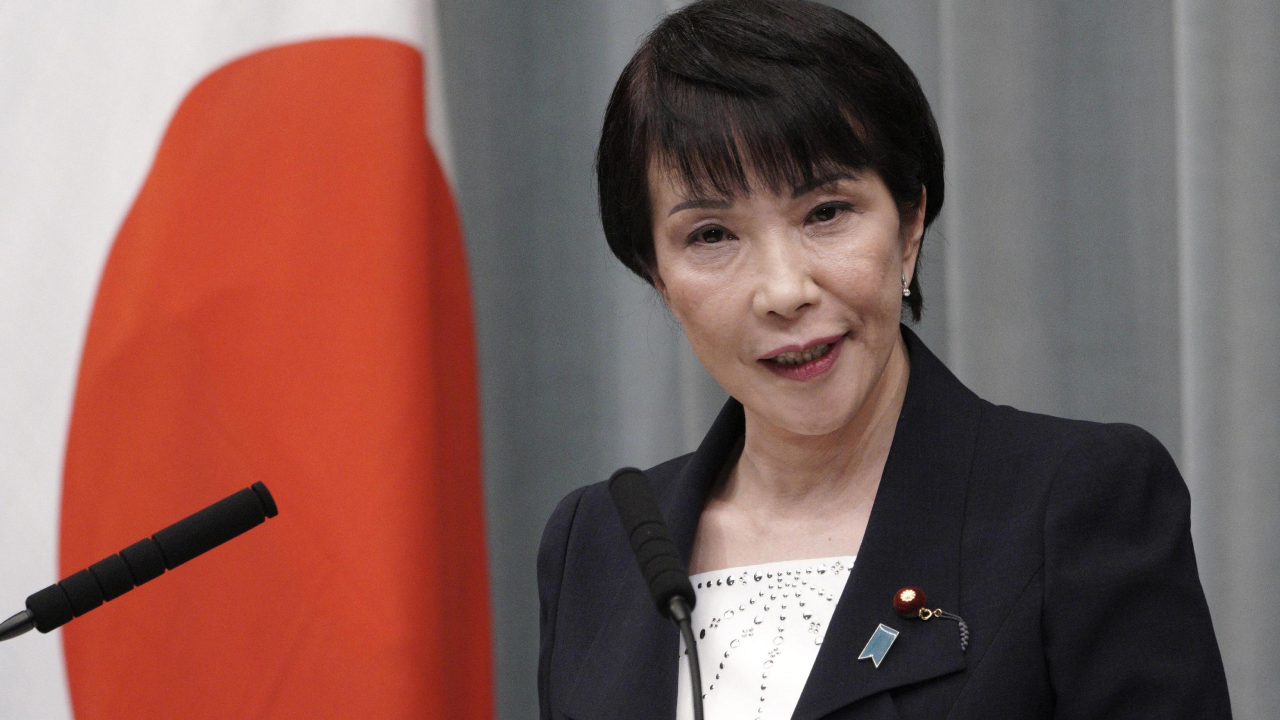
The LDP members chose Sanae Takaichi in his place, who could be the first woman in Japan to hold the role of Prime Minister. First, however, the LDP must find one or more partners with whom to form the coalition that will govern the country. This is because Komeito, literally the “Clean Government Party”, which for more than twenty years was a government ally with the LDP, declared it wanted to break the agreement. All this will make Takaichi’s nomination as Prime Minister slightly more complex.

Let us now see, in more detail, who Sanae Takaichi is and why these political dynamics should interest us.

Who is Sanae Takaichi?

The daughter of an office worker and a policewoman, Sanae Takaichi was born in Nara Prefecture in 1961. Before entering politics, Takaichi was a heavy metal drummer, an expert diver, and a television presenter.

She developed an interest in politics around the 1980s and entered the political game in 1992, when she tried to run for parliament as an independent. The attempt failed, but she did not give up: four years later she ran again with the LDP and was elected. From that moment she is considered one of the most conservative figures of the Liberal Democratic Party.

Moving on to her positions on economic policy, Takaichi is an absolute fan of Margaret Thatcher. Her goal, as she herself has declared, is to become the Iron Lady – the nickname given to Thatcher when she governed – of Japan. Furthermore, she was a protégé of former Japanese Premier Shinzo Abe, a very influential figure in her formation.

This last point is very important: Shinzo Abe, in fact, was the author and strong supporter of an economic policy based on a strong injection of money through fiscal stimuli and increased public spending. The aim was to revitalise the Japanese economy, at that moment in a deep crisis caused also by the shock of the 2008 financial crisis.

Specifically, Abenomics – a portmanteau of Abe and Economics – was founded on three arrows: expansive monetary policy to increase inflation (Japan was in a state of chronic deflation) and depreciate the Japanese Yen, favouring national exports; negative interest rates to incentivise money circulation in the economy; and structural reforms to increase Japan’s competitiveness. Sanae Takaichi has promised to relaunch her vision of Abenomics.

Let us therefore come to the central core of the article.

With Sanae Takaichi, Japan Could Join the Fiscal Stimulus Club

The Japanese Iron Lady seems to have clear ideas: “I have never denied the need for fiscal consolidation, which is naturally important. But the most important thing is growth. I will make Japan a vigorous land of the Rising Sun again”. In other words, economic growth comes before balancing public accounts.

Sanae Takaichi, indeed, has promised huge public funding for government-led initiatives in sectors such as artificial intelligence, semiconductors, and batteries. She then declared she wants to increase defence spending and announced new tax credits – i.e., fiscal bonuses – to increase workers’ net income, deductions for domestic services, and other tax breaks for companies offering internal childcare services. Finally, her programme envisages strong public investments in infrastructure.

Financial markets, naturally, like all this very much: fiscal stimuli and expansive policy are manna from heaven for businesses, which can access credit more easily, invest, innovate and, ultimately, increase profits, with more than positive consequences for share values. And the effects have already been felt.

Market Reactions: The “Takaichi Trade”

The Nikkei, the main Japanese stock index, proved particularly sensitive to developments regarding Takaichi’s nomination as Prime Minister. Retracing the sequence of events, it is patently obvious how the Japan 225 – another name for the Nikkei – strongly desires the Iron Lady governing the Land of the Rising Sun.

For example, Sanae Takaichi was chosen by the LDP as heir to the resigning Prime Minister Ishiba on the weekend of October 4th and 5th, with stock exchanges closed. On Monday the 6th, the Nikkei gained more than 5.5% in a single session – reaching up to 8% if we also count Friday the 3rd, when rumours were already starting to circulate. The “Takaichi trade”, in this sense, led the main Japanese index to touch new highs.

Equally but conversely, when Komeito broke away from the coalition, undermining Takaichi’s nomination, the market reacted very negatively: on October 10th, the Nikkei lost more than 5.6% on the stock exchange.

Since Komeito’s renunciation, Sanae Takaichi has moved to look for other parties that could support the government alliance, obtaining good results. As favourable news came out, the Nikkei reacted consistently: +5.4% in the week between Monday the 13th and Friday the 17th of October.

Finally, on Monday, October 20th, the leader of the right-wing party Nippon Ishin – the Innovation Party – announced that he will make official the agreement to support Takaichi’s choice as Prime Minister. Once again, the Japanese index shows its appreciation: +2% in one session and an updated All Time High.

What is the Moral of the Story?

So, even the fourth economy in the world could start spending, and heavily. With the new leader, Japan could switch to a regime of great public spending, large deficits, and expansive monetary policy, enormously increasing public debt. The goal: to ensure that economic growth exceeds debt growth.

We are in a historical moment where the top three world economies, with the fourth trailing, have launched fiscal stimulus policies founded on a massive increase in public debt.

The moral, therefore, is singular and very simple: if the main thought is “spend”, the method to realise it is printing money. The necessary consequence is the devaluation of money – or, in other words, inflation. In similar scenarios, the main protection instruments, the so-called debasement hedges, have historically represented a valid exit route for capital preservation.

And when one speaks of debasement hedges, the mind immediately runs towards two assets: gold and Bitcoin. All this is even more valid if we rethink the very recent statements of Larry Fink, CEO of BlackRock, released during an interview with the broadcaster CBS: “Markets teach you that you must always question your convictions. Bitcoin and cryptocurrencies have a role, just like gold: they represent an alternative”.

What awaits us in the near future? If you don’t know how to answer, don’t worry, nobody knows. However, to not miss updates, you could subscribe to our Telegram channel and Young Platform, given that we deal often and very willingly with these themes.The information reported above is for exclusively informative and divulgative purposes. It does not in any way constitute financial advice, investment solicitation, or personalised recommendation pursuant to current legislation. Before making any investment decision or asset allocation, it is advisable to contact a qualified consultant.

Gold plummets: worst crash since 2013

Gold crashes: worst crash since 2013

Is gold reversing course? 21 October marks the worst decline in recent years and surprises investors. What happened and why?

On Tuesday, 21 October, the price of gold fell to levels not seen in about 12 years. The event left investors around the world speechless: added to the extent of the loss was the shock caused by the fact that the value of the precious metal had been rising steadily for months. So? It’s time to analyse the facts. 

The price of gold plummets: what happened?

In just over 24 hours, gold recorded its worst performance since 2013, losing almost 8.3% to reach $4,000, before rebounding and settling at a compound of writshock– in the range between $4,050 and $4,150. 

An incredible figure that testifies to the magnitude of the event is related to the loss, in terms of market cap, of the most noble of metals: this -8.3% corresponds, give or take a million, to approximately $2.2 trillion or, to put it another way, the entire market capitalisation of Bitcoin

The collapse of gold has also affected companies linked to the mining sector – some may notice interesting similarities. The two largest mining companies in the world, Newmont Corporation and Agnico Eagle Mines Limited, have in fact recorded sharp declines: from the opening of the stock markets on Tuesday 21st to the time of writing, the two companies are losing more than 10%.

Gold is not the only precious metal in trouble: silver is currently down 8.6%, while platinum, which is actually doing a little better, is down 7.2%.

The causes

If the price of gold is plummeting, as many analysts claim, the causes are mainly technical. In a nutshell, the sell-off could be a necessary consequence of the rally that, since January 2025, has seen the yellow metal gain more than 50%: quite simply, if an asset grows for a long time, it is likely that sooner or later someone will decide to take profits

To this argument, which certainly carries weight given the rise in gold prices, two variables of a more political and economic nature could be added. 

The first is related to the relationship between the United States and China, which appears to be easing: after the clashes on 10 and 12 October, which eventually triggered the worst sell-off in the history of cryptocurrencies, US President Donald Trump and Chinese President Xi Jinping are expected to meet in Seoul on 31 October. The conditional tense is a must because The Donald has repeatedly shown that he changes his mind at the drop of a minute. 

Here is an example. On Tuesday 21st, the POTUS confirmed his intention to reach an agreement with the supreme leader: “I have a very good relationship with President Xi. I expect to be able to reach a good agreement with him,” but then added that the meeting “may not happen, things can happen, for example someone might say ‘I don’t want to meet, it’s too unpleasant. But in reality, it’s not unpleasant. It’s just business.” Pure unpredictability. 

The second, on the other hand, could be understood in part as a consequence of the first: the strengthening of the US dollar. The DXY, which measures the value of the dollar against a basket of the six most important foreign currencies, has gained 1.3% since mid-September. 

Is this a reversal of the trend or a temporary retracement?

Has the upward trend in gold come to an end, or are we witnessing a mere temporary halt? This is the question of questions, to which, of course, no one can answer.

What we can say, however, is that a change of course could be excellent news for Bitcoin. An interesting precedent can be found in 2020: when gold reached its market peak in August at £2,080, Bitcoin hit bottom at £12,250 – what times. 

From that moment on, gold moved sideways for about three years before beginning an upward trend that saw it double in value, while Bitcoin embarked on the epic bull run of 2020-2021: from £10,000 in September 2020 to £65,000 in April 2021. A veritable rotation of capital in favour of the King of Crypto. 

Citigroup assigns a strong ‘Buy’ rating to Strategy

In the event of a trend reversal, will the gold-BTC pattern repeat itself in 2025? Again, there is no way of knowing. However, banking investment giant Citigroup has officially started following Strategy (MSTR), Michael Saylor’s company that holds 640,418 BTC: its first recommendation to investors was ‘Buy’, forecasting a target price for the stock of £485. 

The interesting thing is that Strategy’s share price – at the time of writing – is around £280: if Citi sets a target price of £485, it means that it expects the stock to grow by around 70%. Citi analyst Peter Christiansen, who is monitoring MSTR, said that such a price increase “is with its base case forecast over the next 12 months, set at £181,000, a potential upside of 65% from current levels“.

Gold and itcoin, neck and neck?

We’ll have to wait and see what happens in the coming weeks. The data tells us that, over the last three years, more and more financial institutions – central banks in particular – have started to stockpile physical gold, partly to protect themselves from the devaluation of the dollar, accentuated by the Trump administration’s management.

On the other hand, we are witnessing an almost daily increase in showbero entities, both public and private, that are deciding to include Bitcoin in their treasuries and that, generally, no longer see the asset as an alternative, but as a choice.  

Finally, as always, we remind you that the information contained in this article is for informational purposes only. It does not constitute financial, legal or tax advice, nor is it a solicitation or offer to the public of investment instruments or services, pursuant to Legislative Decree 58/1998 (TUF). Investing in crypto-assets involves a high risk of loss – even total loss – of the capital invested. Past performance is no guarantee of future results. Users are invited to make their own informed assessments before making any financial and/or investment decisions.

Fed: Who wants to be the new president?

Fed: Who wants to be the new president?

The Fed changes face: in May, Chairman Jerome Powell will end his second term, and Donald Trump will have to choose his successor. Who will it be?

After eight years, the Fed, the US central bank, will be led by a new chair: Jerome Powell, who currently holds the top job, will have to make way for a new figure. It will be up to the US President to choose his successor. Let’s take a look at the most likely candidates.  

The Fed prepares for a new Chairman.n

In May 2026, the Fed will undergo a significant structural change: the current Chairman, Jerome Powell, will step down after eight years and be replaced. The person who will head the US central bank will be chosen directly by Donald Trump: after the nomination, however, the Fed Chairman candidate will also have to be approved by the US Senate

As we shall see, Treasury Secretary Scott Bessent has released a list of five names, at least three of whom are potentially very close to being nominated. The only spoiler we can give is that Jerome Powell is not on Bessent’s list. Why? For at least two reasons

No chance for Jerome Powell: dura lex, sed lex

The first is legal in nature: although the law in force in the US – the Federal Reserve Act – does not set a term limit for the Fed Chair, Powell will leave the central bank due to a rather curious coincidence of events. 

Jerome Powell took office as Governor in May 2012 to complete Frederic Mishkin’s unexpired term – much like the very Trumpian Stephen Miran, who was appointed Governor last July following the resignation of Governor Adriana Kugler.

Two years later, in June 2014, Powell was officially appointed Governor for a full 14-year term, expiring on 31 January 2028. In 2018, Donald Trump, during his first term, promoted Powell to the role of Chair (i.e., President) of the Federal Reserve. Four years later, at the legal end of his term, he was confirmed by Joe Biden, who was President of the United States at the time. This brings us to the present day: in 2026, it will be four years since Biden’s confirmation and, as a result, the word ‘End’ will appear. 

But then, if the law does not set a maximum term limit for the Fed Chair, why can’t Jerome Powell be re-elected to that role? Because the Federal Reserve Act has a fundamental rule: the Fed Chair must also be a member of the Board of Governors, i.e. the central bank’s governors. 

This rule cannot be applied in Powell’s case: even if he were re-elected to the top position at the Fed until 2030, his status as Governor would lapse in 2028, as he would have reached 14 years of service since 2014. At that point, he would automatically be removed from the Chair role.  

The Trump administration’s dislike of Powell is well known

Even if this rule did not exist, the situation would not change: the chances of Powell being included in Bessent’s list would be close to zero. And here we come to the second reason, which is more ‘relational’ in nature: Trump and company do not like the current Chair, to put it mildly. 

As we have reported on several occasions, the President of the United States has often used harsh tones towards Jerome Powell, especially during the summer FOMC meetings, when the much-coveted rate cut was slow in coming. Because of this ‘slowness’, Donald Trump began to nickname him Jerome ‘Too Late’ Powell and threatened to fire him on several occasions

With Powell now out of the running, let’s take a look at the names chosen by the US Treasury Secretary.

The most likely candidates

On Sunday, 26 October, while travelling on Air Force One to Tokyo, Scott Bessent told reporters that he had narrowed down the number of candidates to five following the first round of interviews, which is expected to be followed by a second round. 

The list includes Trump adviser Kevin Hassett, former Fed Governor Kevin Warsh, current Fed Governor Christopher Waller, Fed Vice Chair Michelle Bowman, and BlackRock executive Rick Rieder. Let’s take a look at them one by one.

Kevin Hassett

He is a loyal supporter of Donald Trump: he served alongside the US President during his first term as Chair of the Council of Economic Advisors and still holds a position in the administration as Director of the National Economic Council. In addition, between the two terms, he worked for the investment fund of Jared Kushner, Trump’s son-in-law. 

Given this background, it would be reasonable to assume that Hassett could be Trump’s first choice, as he is a politician who places great importance on loyalty. However, there are a couple of strategic considerations. 

Firstly, the markets’ reaction to his appointment could be particularly harmful, as a Fed led by Hassett would be perceived as firmly subordinate to the will of the POTUS (President of the United States). 

Secondly, if the Federal Reserve were to make decisions that Trump did not like, with equally unwelcome macroeconomic consequences, the latter would find it much more difficult to blame one of his loyalists: the rhetoric he is using against Powell would have less effect. 

Kevin Warsh

A former Fed governor, he was a member of the Board of Governors during the 2008 financial crisis, before resigning in 2011 following the US central bank’s shift towards quantitative easing (QE) – i.e. a more expansionary monetary policy. He has been an executive director and vice president at Morgan Stanley and is currently a visiting fellow at Stanford University.

His impressive CV rightly makes him a potential successor to Powell. Added to this are his connections with the American conservative establishment: like Hassett, he also worked for the White House as an economic adviser to George W. Bush (also known as Bush Jr.), who later appointed him Governor of the Fed. Furthermore, the family of his wife, billionaire Jane Lauder, granddaughter of Estée Lauder, founder of the cosmetics company of the same name, with a market cap of £32 billion, is on excellent terms with the Trump family

However, here too, there are a couple of strategic considerations, starting with his views on monetary policy. Warsh is considered a ‘hawk‘ because, according to reports, he is fixated on controlling inflation, which was the main reason for his resignation as Governor in 2011. A Fed led by Warsh would therefore be more inclined to implement a more restrictive, or at least less expansionary, economic policy

In short, a very different attitude from that of the POTUS, who has been imploring Powell to cut rates for months. 

Christopher Waller 

Currently serving as Governor of the Fed, appointed by Trump in 2020, Waller has spent his life between university classrooms and the corridors of the US central bank. 

He has taught as a professor at various universities in the United States – Indiana, Washington and Kentucky – and in Germany – Bonn University. In 2009, he joined the Fed’s St. Louis office as Vice President and Research Director, where he helped create FRED (Federal Reserve Economic Data), a massive free database of economic and financial data managed by the Fed. 

Waller is a crypto-enthusiast and views the cryptocurrency sector in a positive light: on 21 October, at the Fed in Washington, he chaired the Payments Innovations Conference, a meeting which, in his own words, aimed to “bring together ideas on how to improve the security and efficiency of payments, listening to those who are shaping the future of payment systems“. The conference was attended by, among others, Sergey Nazarov, Co-Founder & CEO of Chainlink; Heath Tarbert, President of Circle; and Cathie Wood, CEO of Ark Invest

There is one problem with all this: Christopher Waller’s long experience within the Federal Reserve circles. The future Chair chosen by Donald Trump will also have to be a new figure, capable of reforming the Fed’s structure and making it less decisive in terms of economic management. Waller, on the contrary, may have internalised the very dynamics that Trump intends to dismantle, thus making him unsuitable for the role. 

Michelle Bowman

Michelle ‘Miki’ Bowman is the first of the two outsiders, i.e., those with a background different from the three candidates just examined. However, like Waller, Bowman is also a sitting governor appointed by Trump in 2018. Trump himself promoted her to Vice Chair of the Fed in January 2025, a role that places her just one step below Jerome Powell.

Why is she an outsider? Because, while Hassett, Warsh and Waller have a purely economic or high-finance background, Bowman has a degree in Advertising and Journalism and a master’s degree in Law

Before moving on to the last candidate, a note about Michelle Bowman: she is known for being someone who fights tenaciously to advance her agenda and achieve her goals, despite political pressure. For example, she has repeatedly expressed dissent towards many of the Biden administration’s measures. In September 2024, hers was the first dissenting vote by a Fed governor after two decades of unanimous voting on monetary policy. She is a strong-willed woman who would undoubtedly appeal to The Donald.  

Rick Rieder

Rieder is an outsider not so much because of his academic background, but because he is not a member of the Fed’s Board of Governors. He is, in fact, a senior manager at BlackRock with a deep understanding of the bond market, which is his speciality. 

Rieder is therefore not entirely unfamiliar with the workings of the central bank and the political subplots in Washington. Still, he is very familiar with high finance and the bureaucracy that surrounds it. In this sense, he could be considered the antithesis of Waller

Finally, Rieder is known for his gruelling work schedule: he is said to get out of bed every day at 3:30 a.m. to get a few hours’ head start on his competitors.     

What are the odds for each of the candidates?

Well, we have examined Jerome Powell’s potential successors; now it’s time to take a look at the bookmakers, namely Polymarket

At the time of writing, the odds for each name are: 

  • Kevin Warsh: 15%
  • Kevin Hassett: 15%
  • Chris Waller: 14%
  • Scott Bessent: 5%
  • Rick Rieder: not even listed
  • No announcement before December: 53%

Why is Scott Bessent even on the list? Because Donald Trump, on his trip to Tokyo at the end of October, told reporters that he was considering him as Fed Chair, but that Bessent himself would refuse because ‘he likes working at the Treasury‘. A few minutes later, he backtracked, saying, ‘We’re not actually considering him. ‘ 

So, who will win the race for Fed chair? Or, to quote the article’s headline: who wants to be the new chair?

Fed rates: Will the next FOMC meeting scare the markets?

Fed rates: Is the next FOMC meeting scaring the markets?

Rates, Fed undecided on next moves: the outcome of the December FOMC meeting is less predictable than those in September and October. What do analysts predict? 

Fed rates have a significant impact on financial markets: investors, aware of the importance of interest rates, try to anticipate the decisions of the FOMC (Federal Open Market Committee) to position themselves in the best possible way. Compared to the last two meetings, where the outcomes were practically a foregone conclusion, the December meeting presents numerous unknowns: what is the most likely outcome?  

What happened at the last FOMC meeting?

On 28-29 October, the Fed met at its headquarters in Washington to discuss the macroeconomic situation and decide what to do about interest rates: the Council, with ten votes in favour out of twelve, opted for a 25 basis point cut, lowering rates by 0.25% to a range between 3.75% and 4%. 

The outcome, as we anticipated, was widely expected and already discounted by the markets, which had been growing for weeks – except for the halt on 10 October, when Trump announced 100% tariffs on China.

But it was the press conference following the meeting that was the real key moment. Here, Federal Reserve Chairman Jerome Powell, in listing the reasons behind the cut, made a very significant statement: “A further cut in benchmark interest rates at the December meeting is not a foregone conclusion, quite the contrary.” Markets in chaos.

Since Powell uttered those words until now – that is, at the time of writing – the major stock indices have entered a phase of severe difficulty, but then they rebounded and are now flat.

The crypto market has also taken a hit, of course, with Bitcoin down 16.8 percentage points since 29 October and Ethereum down almost 20,6. Overall, since that fateful day, the total market cap has fallen by £600 billion, from £3.7 trillion to £3.11 trillion.

Fed, shutdown and block on the publication of macroeconomic data 

During that press conference, Powell responded to questions from journalists about the shutdown’s impact on federal activities. In particular, curiosity focused on the stance the Fed might take at the next FOMC meeting, in a context of almost total absence of data crucial for analysing the macroeconomic scenario.  

Powell himself had already mentioned the difficulties of the moment, stating that “although some important data has been delayed due to the shutdown, the public and private sector data that remains available suggests that the outlook for employment and inflation has not changed much since our September meeting“. 

On this issue, however, the most interesting response came from the Fed Chairman to Howard Schneider of the well-known Reuters news agency. The journalist rightly asked him whether the lack of key information, such as inflation or employment, could have led members of the US central bank to “make monetary policy based on anecdotes”, i.e. qualitative data – such as personal opinions – rather than economic models based on quantitative data. 

Powell initially stated that ‘this is a temporary situation’ and that ‘we will do our job‘. He then went on to say, ‘If you ask me whether it will affect the December meeting, I’m not saying it will, but yes, you can imagine… what do you do when you’re driving in fog? You slow down.

In short, the latest FOMC press conference presented us with a Jerome Powell who appeared even more cautious than the classic “we’ll wait and see” approach that characterised the first six months of 2025. A determined Jerome Powell, who wants to see his task through to the end, even though he will leave the top job in May 2026 to make way for the new Fed Chair.

Fed rates: what do analysts and prediction markets forecast?

Here too, the question is entirely open. The most authoritative voices are divided into two camps: a 25-basis-point cut versus no change (rates unchanged). There is, of course, no mention of a 50 basis point cut. 

The first faction, in favour of a quarter-point cut, is leveraging the weakness of the labour market, particularly the slowdown in hiring: in a Reuters poll of 105 economists, 84 bet on a quarter-point cut, while the remaining 21 chose the No Change option. 

In particular, Abigail Watt, an economist at UBS, justified her vote to Reuters by stating that ‘the general feeling is that the labour market still appears relatively weak, and this is one of the key reasons why we believe the FOMC will cut in December‘. Watt goes on to say that she would change her opinion if data were released that ‘contradicted this sense of weakness‘. 

The second faction, those in favour of unchanged rates, instead takes as its main argument Powell’s words quoted above: “the outlook for employment and inflation has not changed much since our September meeting“. 

For example, Susan Collins, head of the Boston Fed, is of this opinion and believes that a third consecutive cut could fuel inflation at a time when the impact of Trump’s tariffs remains unclear. Specifically, she told CNBC that “it will probably be appropriate to keep interest rates at their current level for some time to balance the risks to inflation and employment in this environment of high uncertainty“. 

Interest rates, according to the FedWatch Tool and Polymarket

FedWatch is a financial tool provided by the CME (Chicago Mercantile Exchange) that calculates the implied probabilities of future Federal Reserve interest rate decisions. Why ‘implied’? Because it deduces probabilities from the market prices of 30-day Federal Funds futures rather than from explicit opinions. 

In simple terms, FedWatch reports market expectations by looking at investors’ portfolios. If it says ‘80% probability of a cut’, it means that 80% of the money invested in the market today is betting on a cut. Currently, according to this tool, a 25 basis point cut is 89,6% likely, while No Change is 10,4%.

According to the most famous prediction market of the moment, Polymarket, the result is a 25 basis point cut at 97%, No Change at 3%, a 50 basis point cut at 1% and a 25 basis point increase at around 1% – if you are interested in knowing how it works, we have written an Academy article dedicated to Polymarket

What will the Federal Reserve do? 

As we have explained so far, the Fed will have to take a large number of variables into account before its Chairman leaves the room, approaches the microphone and utters the familiar ‘Good afternoon‘.

Mercosur: The EU Gives the Green Light to the Agreement

Mercosur agreement: a new era for global trade?

After 25 years of negotiations, Mercosur and the European Union are closer than ever to finalising a strategic partnership. So, what does this actually mean?

Mercosur and the European Union may be on the verge of signing a trade agreement that the European Commission itself has called “the biggest free trade deal ever signed”. The EU-Mercosur agreement involves countries that account for approximately $20 trillion in GDP and 700 million consumers.

What Exactly Is Mercosur?

The Mercosur—or Mercado Común del Sur (Common Market of the South)—is an organisation established in 1991 by the Treaty of Asunción. Its purpose is to “promote a common space that generates business and investment opportunities through the competitive integration of national economies into the international market”. The full members are Brazil, Argentina, Paraguay, and Uruguay. Venezuela was also a full member but was suspended in 2016 due to anti-democratic practices. Bolivia is currently in the process of joining as the fifth full member.

Additionally, there are several associate members, who enjoy privileged status but are not part of the main bloc. These include Chile, Colombia, Ecuador, and Peru.

Mercosur is a common market with the goal of increasing the exchange of goods and services, as well as the free movement of people. This applies both regionally among South American countries and internationally through agreements with other blocs, such as the one with the European Union. To achieve this, member countries are working to mutually reduce customs barriers, thereby promoting economic integration.

In 2023, the Mercosur bloc generated $447 billion in exports and $357 billion in imports, which is equivalent to 10.9% of international trade. These figures include both internal trade among members and external trade with other countries.

What Does the EU-Mercosur Agreement Entail?

Negotiations between the EU and Mercosur have been ongoing for approximately 25 years, marked by periods of tension and détente. A breakthrough finally occurred on 6 December 2024 in Montevideo, Uruguay, when EU leaders reached an understanding with the South American bloc countries. This past Wednesday, the European Commission presented the treaties that will define the commercial agreement, representing another significant step towards its officialisation.

The agreement is a result of a shared desire to remove trade barriers, ensure a responsible and eco-friendly supply of raw materials—with a particular focus on addressing Amazon deforestation—and send a clear message in favour of regulated international trade and against all forms of protectionism.

Specifically, the agreement is based on a principle of reciprocity. European industries, primarily those in automotives, machinery, and spirits, will gain greater access to the Mercosur market. In return, Mercosur will be able to more easily export its agri-food products to Europe, including meat, sugar, coffee, and soy.

This latter point, in particular, has caused some concern among agri-food companies in France, Poland, and, to a certain extent, Italy. The primary fear is related to unfair competition. South American countries have less restrictive environmental and food regulations than the EU, allowing the use of antibiotics, pesticides, and hormones that are banned in Europe.

In any case, the agreement provides for a gradual easing of customs tariffs on 90% of goods traded between the two blocs. It also establishes preferential channels for both European and South American companies, giving them greater access to public tenders and investment opportunities.

According to the European Commission, the final result will be a 39% increase in EU exports to Mercosur and an estimated 440,000 new jobs created across Europe.

The Road Ahead

As anticipated, the EU-Mercosur agreement is not yet official. However, it represents a crucial phase in bringing the two blocs closer, especially as they seek protection from costly Trump-era tariffs.

This is an interim trade agreement, meaning it is provisional. As such, it does not require the approval of all 27 member states, but rather only the ratification of the qualified majority of the EU Council. This means at least 15 out of 27 countries (55%) that represent at least 65% of the population must vote in favour.

Russia-Ukraine war: updates

Russia–Ukraine war: any updates?

It was a busy weekend for Donald Trump, who met with Putin, Zelensky, European leaders, and NATO representatives. What happened – and how did markets react?

It was an eventful and politically charged weekend: over the course of four days, a bold and unpredictable Donald Trump hosted Russian President Vladimir Putin, Ukrainian President Volodymyr Zelensky, six European heads of state, including Giorgia Meloni, and NATO Secretary General Mark Rutte in the United States. The aim? To seek a potential solution to a war that has now entered its fourth year, following Russia’s invasion of Ukraine.
Here’s a brief recap of what took place – and a final look at how the markets responded.

Trump and Putin: meeting in Alaska – 15 August

On 15 August, at a US military base near Anchorage, Alaska, US President Donald Trump met face-to-face with Russian President Vladimir Putin to discuss the ongoing war in Ukraine. The lead-up to the meeting attracted global attention, mainly due to Trump’s surprisingly warm demeanour towards Putin: red carpets, handshakes, pats on the back, and broad smiles.

But one detail, in particular, made headlines: the US President spontaneously offered his Russian counterpart a ride in the iconic, armoured presidential limousine – known as “The Beast” – away from cameras and microphones. What was said during that ten-minute ride remains unknown. What is certain, however, is that the two men were seen laughing and chatting amicably, like old friends.

As for the press conference that followed – the quotation marks are deliberate – very little of substance was shared. The two leaders answered virtually no questions, instead offering vague and formulaic statements.

Putin opened with praise for the atmosphere of “mutual respect”, going so far as to remind attendees that Alaska was once a Russian territory. He then shifted to the main topic: the war in Ukraine. Once again, the Russian leader insisted that peace talks could only begin if certain preconditions were met – namely, international recognition of Russia’s claims over disputed regions, Ukraine’s demilitarisation and neutrality, a ban on foreign military presence, and new Ukrainian elections.

Then it was Trump’s turn. Notably restrained, the US President – usually known for his long-winded statements – kept things brief. “There were many points on which we agreed”, “great progress”, and “an extremely productive meeting” were among the few phrases he offered. In essence, a lot of diplomatic smoke and mirrors, followed by the admission that no concrete agreement had been reached – but that “we have a very good chance of getting there”.

Trump, Zelensky, Europe and NATO meet in Washington, D.C.

Between Sunday and Monday, Donald Trump held talks with Ukrainian President Volodymyr Zelensky, before extending invitations to six European leaders – France’s Macron, Germany’s Mertz, Italy’s Meloni, Britain’s Starmer, Finland’s Stubb, and EU Commission President Ursula von der Leyen – as well as NATO Secretary General Mark Rutte.

The main topic on the agenda was clear: the security and territorial integrity of Ukraine. For months, Zelensky, alongside European and NATO officials, has been urging President Trump to provide firm guarantees that any peace deal must respect Ukraine’s sovereignty, and that future agreements must act as a deterrent against further Russian aggression. The proposal? To allow Kyiv to build a modern, specialised and well-equipped army that would discourage any future invasions.

The problem? As we saw earlier, Vladimir Putin is wholly opposed to this and has made very different demands.

What’s Next?

It’s difficult to predict, given Putin’s elusive nature and Trump’s unpredictability. That said, on August 19, Trump confirmed that Putin had agreed to a direct meeting with Zelensky, which would be followed by a trilateral summit involving the US, Russia, and Ukraine.

In a post on his Truth Social account, Trump wrote:
“At the end of the meetings, I called President Putin and began organising a meeting, at a location to be determined, between President Putin and President Zelensky. After this meeting takes place, we will have a trilateral meeting, which will include the two presidents and Mme”

UK Prime Minister Keir Starmer and German Chancellor Mertz also confirmed this announcement.

How did the markets react? 

The reaction from traditional financial markets was largely positive. The three major US indices – the Nasdaq, Dow Jones, and S&P 500 – initially rallied on news of the Trump–Putin summit in Alaska, before easing back slightly. Analysts suggest investors were hoping for more concrete results, rather than vague diplomatic gestures.

A similar trend was observed across European markets, particularly in Paris, Frankfurt, and London, which have all been performing strongly since early August.

The crypto market, however, told a slightly different story.

Between August 13 and 14, Bitcoin surged to a new all-time high of $124,000, before pulling back to around $115,600 after again failing to break through the resistance zone between $121,000 and $123,000.

Ethereum also came close to surpassing its own all-time high, missing it by just $100. It’s currently trading at around £4,300, with a renewed breakout attempt looking likely – especially now that the previous resistance at £4,100 seems to have become support.

As for the Total Market Cap, since the announcement on Thursday, 7 August, it has risen from $3.7 trillion to approximately $3.85 trillion – a gain of around 3.8% (roughly $150 billion).

Lastly, Bitcoin dominance continues to slide. Over the past 12 days, BTC’s market share has decreased by more than three percentage points, currently standing at 59.7% at the time of writing.

Is there a glimmer of hope?

So, can Donald Trump really bring Vladimir Putin and Volodymyr Zelensky to the same negotiating table? Are we genuinely moving towards peace, or is this just political theatre?

And what role will Europe play in the outcome?

Subscribe to our Telegram channel or sign up directly to the Young Platform below to stay up to date with all the latest developments.

Donald Trump and tariffs: the truth hurts you

donald trump

US President Donald Trump has supported the duties with often false or inaccurate statements. Here we will look at the most sensational ones. Enjoy!

US President Donald J. Trump based his campaign on the need to make America great again – Make America Great Again – and did so to the tune of slogans and catchphrases such as ‘America First!’ and ‘return to the Golden Age’. The trade tariffs, imposed, then lifted, and then reinstated, are the result of this strategy and are justified by blows of impressive statements. The problem is that many of these are unfounded. Off to fact-checking!

Donald Trump, when talking about the United States, tends to inflate the figure.s

Donald Trump is a proud American and, as such, is prone to magnifying everything about the United States of America, including numbers. Let us examine some sovereignist flare-ups: 

  • The Paris Climate Agreement cost the United States trillions of dollars that other countries were not paying. In Congress on 4 March 2025, Donald Trump justified his exit from the Paris Climate Agreement in this way: untrue, the United States has never earmarked even remotely similar sums for the Agreement. Joe Biden, when he took office, promised to allocate around $11 billion per year, a figure that was later scaled back. 
  • Honda has just announced a new plant in Indiana, one of the largest in the world‘. Also at the Congress on 4 March 2025, the US President declared in a triumphant tone the construction of a new industrial hub by the Japanese giant: untrue, Honda had expressed its intention to build the latest Honda Civic in Indiana rather than Mexico, as reported by Reuters, without confirming this.  
  • The US is collecting $2 billion a day from customs duties. ‘. Statement of 8 April 2025, during a speech to coal industry workers: false, the figure is in the hundreds of millions, not billions and, most importantly, the duties are borne by American importers, not foreign exporters.  
  • We were losing $2 trillion a year on trade“—sentence uttered by Donald Trump on 22 April 2025 during an interview with Time in the White House. Here, the POTUS refers to the US trade deficit with the rest of the world before his arrival: false, in 2024 the imbalance amounted to some $918 billion, in 2023 to $773 billion, in 2022 to $945 billion, and so on. 
  • I have signed 200 agreements. ‘. On 25 April 2025, in the same interview with the Times, when asked, ‘Not a single one (trade agreement, ed.) has been announced. When will you announce them?” Donald Trump replied with a dry “I have closed 200 deals”: untrue, there was – and is – no evidence to validate this claim.

Donald Trump and the European Union: not quite love at first sight

That the President of the United States of America has no excessive sympathy for the Old Continent is a well-known fact: just recently, he confirmed this ‘slight’ antipathy by raising tariffs to 50%. Let us see why: 

  • They don’t buy our cars, they don’t buy our food. They don’t buy anything.” On Sunday, 6 April 2025, Donald Trump told reporters aboard the presidential plane Air Force One that the EU would take advantage of the US: untrue. In 2024 alone, the EU imported almost $650 billion worth of goods from the US. Not exactly chump change. 
  • They don’t take our agricultural products“. Also on that 6 April, POTUS accused us of not buying goods and commodities for agriculture: untrue, as the US government itself reports, in 2024, the European Union spent almost $13 billion (+1% compared to 2023) on agricultural commodities. We like American dried (nuts) fruit.
  • They put up barriers that make it impossible to sell a car. It’s not a question of money. It’s that they make everything so difficult: the standards, the tests. They drop a bowling ball on the roof of your car from 20 feet up. And if there’s a small dent, they tell you: ‘Sorry, your car is not suitable‘. This is beautiful. Monday, 7 April 2025, bilateral with Israeli Prime Minister Benjamin Netanyahu: untrue, there is no similar safety check in Europe, and most importantly, nowhere does it say that minor damage can cause the car to fail the test. 
  • The European Union was created to exploit the United States of America‘: false. On 10 April 2025, Donald Trump is the protagonist of a tirade so vague that it is difficult to refute. In any case, numerous scholars – especially historians and economists – have been taken aback by this statement. John O’Brennan, a leading professor of European Integration, European Union Politics, and International Relations, said that this statement ‘could not be more wrong or inaccurate‘. And like many others.

From China with fury

That Americans and Chinese do not get along well is well known. US President Donald Trump, since his inauguration, has stepped up his game with a trade war based on extreme tariffs that was later suspended. Let us examine some of his recent mental gymnastics:

  • We had massive deficits with China. Biden let the situation get out of hand. These are $1.1 trillion deficits; ridiculous, and it is simply an unfair relationship. It is 23 January 2025, and we are at the annual meeting of the World Economic Forum in Davos when these words come from the speakers: false. The fact checkers indicate that in 202,3 indeed the US trade deficit as a whole will be around that figure. Donald Trump, however, forgets one crucial detail: the $1.1 trillion deficit concerns the whole world, not just China, and only considers goods without including services in the calculation. 
  • We have a deficit with China of more than a trillion dollars. ‘ This was stated by The Donald in an interview on Fox News Radio on 21 February 2025: false. As reported by the B.E.A. (Bureau of Economic Analysis), in 202,4 the trade deficit was around $263 billion; in 2023 the figure was close to $252 billion. In short, it was wrong by about $730 billion.
  • China has never paid even 10 cents to any other American president. Liberation Day, Wednesday 2 April 2025. Donald Trump announces tariffs for the first time and finds time to fire another propaganda bullet. By this, POTUS meant that before him, the Chinese were free to trade with the US for free: untrue. In 1792, Alexander Hamilton, then US Secretary of the Treasury, proposed the Tariff Act – also known as the Hamilton Tariff – to incentivise the consumption of domestically produced goods. 

For Donald Trump, the grass is always greener on the other side

We close this review of rhetorical acrobatics with the United States’ neighbours: Canada and Mexico. These three great nations have always had very close trade relations, formalised by various agreements including NAFTA (North American Free Trade Agreement) and the USMCA (United States Mexico Canada Agreement). 

  • The US has a ‘200 billion deficit with Canada. He emphasised this several times on 7 January 2025 at a press conference at his home in Mar-a-Lago: false. Again, the B.E.A. data tell us that in 2024 the imbalance between imports and exports with Canada amounted to $35.7 billion.
  • Canada is “ONE OF THE NATIONS WITH THE HIGHEST DUTIES IN THE WORLD“. All caps because Donald Trump, on Truth, often writes in caps lock. On 11 March 202,5, he published this statement: false, as also reported by the World Bank, which puts Canada in 102nd position out of 137 countries for weighted average tariff on all products. This indicator reflects the average import tax, calculated by taking into account the weight of different products imported.
  • Canada does not allow American banks to do business in Canada, but their banks invade the American market. Oh, that sounds about right, doesn’t it?” he wrote in Truth on 4 March 2025: untrue, Canada does not ban foreign banks, much less American ones. They have recently tightened regulations, but banking institutions like Bank of America, Citigroup, and Wells Fargo have been operating in Canada for more than a hundred years.
  • We have a $200 billion trade deficit with Mexico“. The US President said this on 9 February 2025, during an interview for Fox News: untrue. Again, the B.E.A.’s 2024 figures show a trade deficit of around $180 billion, half of what Trump said.

In short, we have only analysed one tenth of the falsehoods that the 48th President of the United States of America has been able to invent during these first five months in office. Knowing the data is very important and allows you to speak with full knowledge of the facts and avoid embarrassing and momentous blunders. 

For this reason, join Young Platform and get informed so that you will have safe arguments with your friends during the Thursday afternoon aperitif!

Banking risk: what is it and why is it triggered?

Explore what banking risk is and how it justifies the extra profits earned by banks.

What is Risk Banking? No, it’s not the latest expansion of your favourite board game, although the dynamics of conquest and strategy that govern it bear a striking resemblance. This term, cleverly borrowed from the famous board game, describes the recent trend among credit institutions—especially those with a bit of extra capital—to engage in mergers, acquisitions (M&A), and amalgamations. It’s akin to when you’ve gathered enough armies in the game to start eyeing your neighbour’s territories with interest.

One key macroeconomic factor associated with banking risk is the change in interest rates, a topic frequently discussed in our articles due to its significant impact on various markets, including the cryptocurrency market. When central banks raise interest rates to combat inflation—while many of us witnessed rising mortgage payments—it’s often a boon for bank profits. These additional earnings will likely be reinvested to promote growth and expansion. So, prepare yourself; the banking risk landscape for 2025-2026 is shaping up to be quite eventful.

The health of Italian banks

Before exploring the main topic, it is helpful to briefly review the health of credit institutions to understand the context in which this risky phenomenon develops. In recent years, banks have greatly benefited from central banks’ decisions regarding interest rates.

In 2023, Italy’s largest listed banks reported a combined net profit of EUR 21.9 billion, which increased to EUR 31.4 billion in 2024. At the European level, the earnings of the twenty largest banks reached approximately EUR 100 billion.

The primary driver of growth during this period was the European Central Bank’s decision to raise interest rates in an effort to combat inflation. From July 2022 to October 2023, reference rates increased from 0% to 4.5%. This rise led to an improvement in the net interest margin, which is the difference between the interest income generated from loans and the interest expenses paid on deposits. In simple terms, banks raised lending rates on loans more quickly than they increased the interest offered on deposits.

However, the positive results were not solely due to this factor. There was also a rise in net commissions, particularly from asset management services. These elements have contributed to the current situation where banks, having accumulated substantial profits—akin to conquered territories or bonus cards in a game—now possess significant liquidity, or ‘armies.’ The next step for these banks, in both contexts, is to invest these resources for further expansion.

The banking risk

The metaphor of banking risk is particularly fitting, as the sector is increasingly resembling a competitive arena. However, unlike a board game, the push for consolidation among banks is driven by several strategic motivations that are essential for their growth and stability. Here are the main factors:

  1. Seeking economies of scale: the primary objective is to unify operational structures and optimise costs through the rationalisation of internal processes and the integration of technology platforms.
  2. Geographical and product diversification: expanding territorial presence and broadening the range of services offered enables banks to mitigate the risks associated with concentrating on specific markets or customer segments, while simultaneously increasing cross-selling opportunities and, consequently, revenues.
  3. Increased competitiveness: larger banks generally have greater bargaining power and a higher capacity to invest in new technologies, human resources development and marketing initiatives, thus strengthening their market position.
  4. Strategic response to industry challenges: M&As are seen as a response to accelerating digitisation, the need to comply with increasingly stringent regulations (e.g., on capital and liquidity requirements), and the urgency of addressing cross-cutting issues such as environmental and social sustainability.
  5. Shareholder pressure: A relevant factor is the constant pressure exerted by shareholders to maximise the value of shares and dividends, and to attract new investors.

The banking risk: the most emblematic cases

The Italian banking landscape has experienced notable mergers and acquisitions (M&A) that have reshaped the credit sector. The merger between Intesa Sanpaolo and UBI Banca, finalised in 2021, is seen as a pivotal moment that sparked the latest wave of banking consolidation. This merger not only solidified Intesa Sanpaolo’s leadership but also catalysed further integration within the industry.

Another significant example is Crédit Agricole Italia’s acquisition of Credito Valtellinese (CreVal) between 2020 and 2021, which highlights the growing interest of foreign groups in enhancing their presence in key regions of Italy. Additionally, BPER Banca has remained an active participant in the market, acquiring Banca Carige in 2022 and engaging in ongoing discussions about a potential merger with Banca Popolare di Sondrio.

In the background, several hypotheses involving major players are circulating. There has been extensive discussion about UniCredit‘s interest in increasing its stake in Germany’s Commerzbank, as well as previous talks about a potential merger between UniCredit and Banco BPM. Currently, Banco BPM is working to finalise its takeover bid for Anima SGR, which is also attracting interest from UniCredit, with a bid exceeding EUR 10 billion. 

Meanwhile, Unipol, having been excluded from the recent sale of public shares in Monte dei Paschi di Siena, is focusing on facilitating a merger between Bper and Popolare di Sondrio, in which it holds a significant stake. 

Banca Monte dei Paschi di Siena (MPS) remains a central element in the mergers and acquisitions (M&A) dynamics, with the Italian government seeking market-based solutions for its eventual stabilisation and privatisation. In this context, there has been renewed speculation about a possible involvement of UniCredit..

What will be the following developments?

What will be the outcome of this phase of banking risk? It is complex to provide a clear answer, mainly because there won’t be an absolute or definitive winner. Banking risk, unlike the dynamics of a board game, is a continuous process that adapts to the changing economic and financial seasons.

The current period is undoubtedly critical. With interest rates falling, the exceptional profit margins that banks have enjoyed in recent years may begin to normalise. This situation prompts banks to reevaluate their strategies and develop new plans to maintain profitability and strengthen their competitive positions.

As a result, we can expect further consolidation within the industry. Large banking groups may seek to fortify their positions to compete effectively on a global scale, while smaller institutions will need to take action to avoid being left behind. This could involve forming strategic alliances or pursuing mergers to create national or specialised leaders in the market.

What about the customers and the economy as a whole? Proponents of these operations often emphasise the anticipated benefits related to increased stability, efficiency, and investment capacity. It will be crucial to monitor whether these significant manoeuvres lead to real advantages in terms of effective competition, service quality, and support for the real economy. In summary, the dynamics of banking risk are still ongoing, and the upcoming developments will continue to shape the future of the credit sector.