What is the FED’s stance on cutting interest rates? Here are analysts’ predictions.
The Federal Reserve (FED) is the central bank of the United States and plays a crucial role in the global financial system. Economists, analysts, and investors worldwide closely monitor every decision it makes, especially regarding interest rates.
But what can we expect from the upcoming FED meeting scheduled for 11-12 June 2024? Analysts predict that the FED will keep interest rates unchanged, but some signals could anticipate future cuts by the end of the year.
What is the FED, and why is it important?
The Federal Reserve, or FED, is the institution that serves as thecentral bank of the United States. Its role is to stabilise the economy through the management of money and interest rates. Its main functions are controlling inflation, regulating the banking system, and promoting economic stability. The interest rates set by the FED influence the cost of money, i.e., how much it costs to borrow or how much you earn by saving.
The current interest rate situation
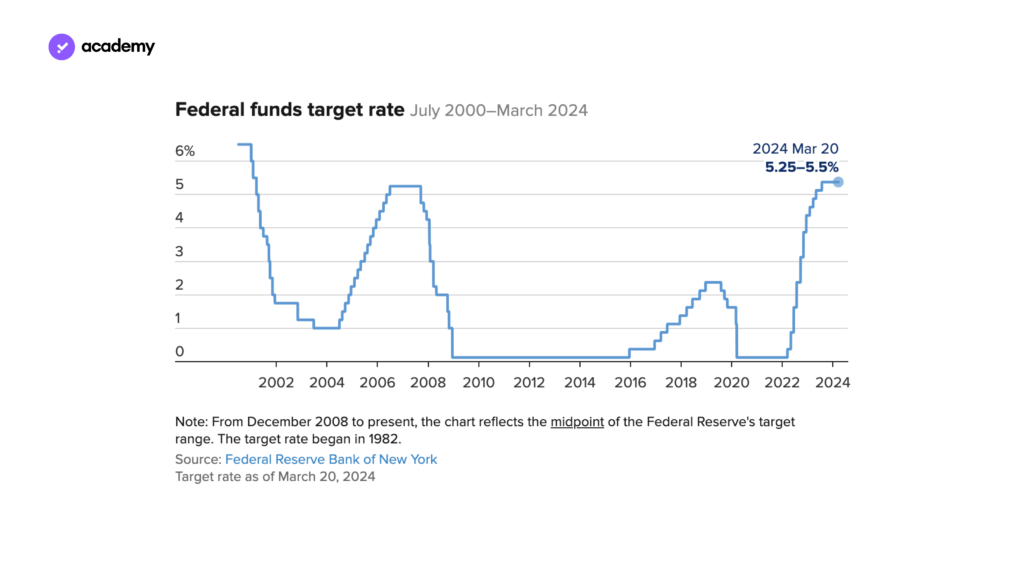
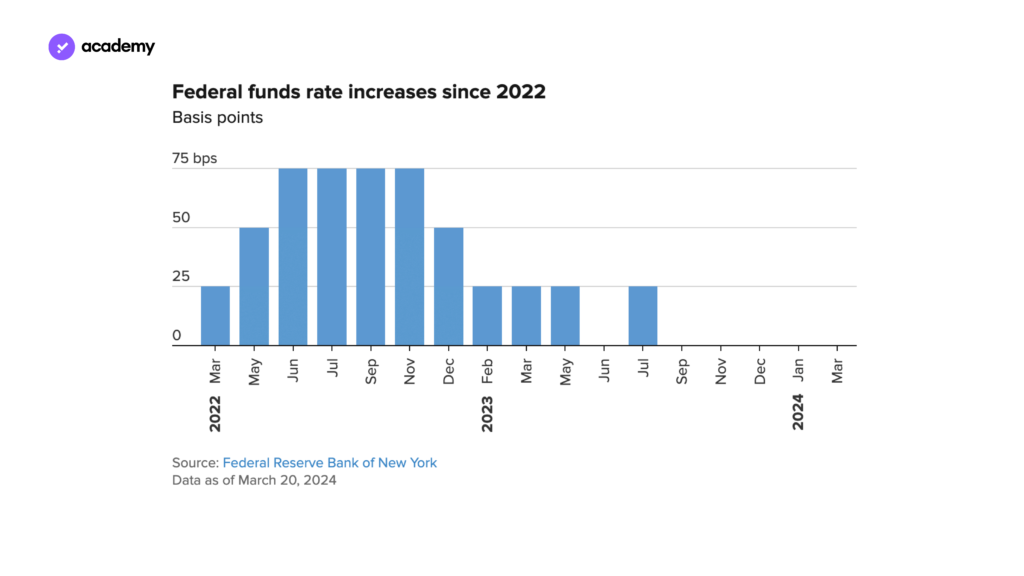
FED interest rates have been steady between 5.25% and 5.5% since July 2023. After a year of stability, the FED decided not to increase rates further despite mixed signals on inflation. According to FED Governor Christopher Waller, some inflation reports in the early months of 2024 temporarily cooled expectations of a rate cut. Still, recent consumer price index (CPI) data suggest that inflation is not accelerating.
Analysts’ predictions for the FED June meeting
According to the CME’s FedWatch Tool, the probability of a rate cut at the June meeting is just 0.1%. The forecasting site Kalshi also indicates a 99% probability that rates will remain unchanged. However, analysts predict the FED might signal potential rate cuts later in 2024. During the meeting, the “Summary of Economic Projections” will be updated, where monetary policymakers will outline their forecasts for the end of the year.
Impacts on everyday life
The FED’s decisions on interest rates have a direct impact on people’s daily lives. Higher interest rates mean more expensiveloans for homes, cars, and businesses and higherreturns for savers. Conversely, lower rates make loans cheaper but reduce earnings on savings. For example, 30-year mortgage rates reached an annual high of 7.79% in 2023, then fell to 7.03% by the end of May 2024.
When might a rate cut occur?
According to bond markets, the first rate cut could happen in September 2024, with a 50% probability. A second cut might follow in December. However, these predictions are subject to rapid changes in response to economic data. For example, there is still a 15% probability that there will be no cuts in 2024.
The June FED meeting is highly anticipated, but it is unlikely to bring immediate changes in interest rates. All eyes are on the updated economic projections and the statements from FED Chairman Jerome Powell. The possibility of rate cuts during 2024 will depend on the strength of the labour market and progress in controlling inflation.
The FED’s decisions will continue to have a significant impact on the global economy and the daily lives of millions of people. Monitoring these decisions helps us better understand economic dynamics and make more informed financial decisions.
The price forecasts in this article are based on sources believed to be reliable, but do not guarantee the market’s future performance. They do not constitute a recommendation or financial advice. Investing in crypto-assets involves risks, including the potential loss – even total – of the invested capital. Users are required to conduct independent evaluations before making economic and/or investment decisions and to consult their own specialised financial advisor.
The recent drop in inflation rates in France and Italy has ignited a lively debate about possible moves by the European Central Bank (ECB), with much attention focused on the At the last ECB meeting in April 2024, the Governing Council decided to keep the three key interest rates unchanged.
This decision came despite the recent drop in inflation rates in France and Italy. In fact, the picture in March sparked a lively debate on possible moves by the European Central Bank, pointing to the possibility of an early rate cut. This discussion comes against a backdrop of Europe actively trying to balance economic growth with controlling inflation, a topic of considerable interest to investors, policy-makers, and consumers.
The European panorama
The eurozone witnessed a significant reduction in inflation in 20 nations, which fell to 2.4% in March. This result exceeded analysts’ expectations, who had forecast a stable inflation rate of 2.6%
This is consistent with the inflation trend, which has shown a steady decline since its peak of 10.6% in October 2022, driven by pandemic disruptions and geopolitical tensions, particularly Russia’s invasion of Ukraine.
A further decline is therefore encouraging and marks a moment of optimism, which the ECB meeting in April 2024 confirmed.
Indeed, the Council pointed out that most measures of core inflation are showing signs of easing, with wage growth moderating gradually and companies beginning to absorb some of the increase in labour costs into their profits.
The demand-pulling effects of previous interest rate hikes, together with tight financing conditions, are helping to moderate inflation. Nevertheless, domestic price pressures remain strong, particularly in the service sector, keeping service price inflation at high levels.
Falling inflation in France
In France, inflation slowed to its lowest level since July 2021, with consumer price growth slowing to 2.3% in March from 3.2% in February, according to the national statistics agency. This was well below economists’ forecasts, which expected a figure of 2.8%, signalling a general slowdown in price increases. In particular:
services inflation dropped to 3%
that of energy at 3.4%
and a significant decrease in food inflation to 1.7 per cent, with fresh food prices falling by 3.9 per cent year-on-year.
Month-on-month inflation data further confirmed the trend, slowing from 0.9% to 0.3%, indicating a considerable easing of inflationary pressures in the eurozone’s second-largest economy.
Falling inflation in Italy
Italy also reported a lower-than-expected inflation rate for March, with consumer prices rising by 1.3% year-on-year, against forecasts of 1.5%. This moderation was attributed to the end of seasonal clothing sales and price increases in transport services, along with a slowdown in falling energy costs.
ECB rate cut decisions
The interest rates on the main refinancing instruments, the marginal lending facility and deposits will remain fixed at 4.50 %, 4.75 % and 4.00 % respectively.
Furthermore, according to statements given at the press conference following the meeting, the Council believes that inflation levels in the coming months will still fluctuate around current levels. The decline in inflation will not be linear and will therefore have to be assessed on a case-by-case basis. In all likelihood, the target level of 2% will only be reached next year.
François Villeroy de Galhau, Governor of the Bank of France, hinted at the possibility of a rate cut in June, provided inflation continues to fall faster than expected and the economy remains stagnant. He emphasised the importance of not overburdening economic activity by maintaining a tight monetary policy for a prolonged period.
Speaking at a financial event in Barcelona, Pablo Hernández de Cos outlined a scenario where June could see the start of interest rate cuts by the ECB. As Governor of the Bank of Spain, De Cos’ outlook carries significant weight, highlighting a cautious but optimistic approach to the Eurozone economy.
Wage growth and inflation
Despite encouraging signs of cooling inflation, ECB monetary policymakers remain
Despite encouraging signs of cooling inflation, the ECB’s monetary policymakers remain cautious, particularly as wage growth gradually moderates. Companies are starting to absorb some of the increase in labour costs with their profit margins.
With service sector inflation down only slightly to an annual pace of 3.9% in February, the central bank is taking a measured approach, probably waiting until June to reassess wage pressures and their potential to bring inflation closer to the target.
Market expectations and ECB position
Analysts believe that the biggest complication could come if the US Federal Reserve delays its policy easing to keep up the fight against inflation. For this reason, they believe the ECB will not cut rates before its big sister.
To the supporters of this interpretation, ECB President Christine Lagarde replies: ‘We are data-dependent, not Fed-dependent’. She adds, ‘We do not speculate what other central banks might do. (…) Different factors drive inflation in the US and the Eurozone. (…) It cannot be assumed that Eurozone inflation will mirror US inflation.”
After the ECB decision, money markets were pricing about a 70% chance of a 25 basis point rate cut in June, compared to about an 80% chance earlier on Thursday.
Experts such as Carsten Brzeski, global head of macro at ING, suggest that the March inflation data, combined with upcoming information on wage growth and ECB staff forecasts for GDP and inflation, are tilting the narrative towards a first rate cut in June. Kamil Kovar of Moody’s Analytics interprets the latest data as a significant step towards defeating inflation, advocating up to five rate cuts this year.
Perspectives
The ECB’s decision to keep interest rates unchanged and to continue with a measured monetary policy reflects a careful assessment of current economic conditions and the inflation outlook. By committing to a flexible and data-driven approach, the ECB underlines its determination to ensure lasting price stability by balancing the needs for economic growth with its responsibility to keep inflation under control. The ECB’s future moves.will be awaited with great interest, as Europe navigates through complex economic challenges, seeking to ensure a sustainable recovery and long-term stability.
On 11 April 2024, the European Central Bank (ECB) is set to make a decision that could affect the economy across Europe. Recent data showing a surprising drop in inflation rates in France and Italy are growing speculation about a potential interest rate cut. This article explains the basics of the ECB’s role, inflation dynamics, and the possible impacts of upcoming policy decisions.
The European Central Bank explained
The ECB guards monetary stability for the Eurozone countries, ensuring that the euro remains a stable and reliable currency. Its main tool for achieving this goal is manipulating interest rates, a lever that directly influences economic activity across the continent.
The importance of ECB decisions
The ECB’s decisions have repercussions for the entire economy, from the expansion of companies that borrow to invest in their businesses to interest rates on personal savings accounts or mortgages.
The adjustment of interest rates can, in fact, stimulate economic growth by making borrowing cheaper or, on the contrary, cool an overheated economy. In other words, the health of the economy, reflected in employment rates, business growth, and consumption, is directly influenced by ECB policies.
ECB impact on markets
The ECB’s decisions affect not only the traditional economy but also the investment world, including cryptocurrencies.
When the ECB changes interest rates, it affects how people invest their money. If interest rates are low, it costs less to borrow money, which may make investing in stocks or real estate more attractive. On the other hand, if rates rise, keeping one’s savings in bonds with lower risk rates may become cheaper.
Although cryptocurrencies belong to a market that is considered more volatile, they are not insulated from the effects of these policies. The ECB’s decisions may influence investors’ risk appetite: in times of low rates, some may seek higher returns in cryptocurrencies, while in times of higher rates, they may prefer investment options considered safer.
The element that most influence interest rate decisions is inflation.
The role of inflation and its effects
Inflation measures how much more expensive goods and services have become in a given period. A certain level of inflation is normal and even desired in a healthy economy, as it indicates growth. However, too high or too low inflation can signal trouble, affecting everything from your grocery bill to your savings.
High inflation means your money is not worth as much as before, affecting how households plan their budgets and the future. To manage inflation, central banks such as the ECB adjust interest rates. Lowering rates can encourage spending and investment by making borrowing cheaper while raising rates can help cool a sluggish economy.
How to monitor ECB decisions
To monitor these dynamics, you can use Young Platform. As an app and on the web, Young Platform offers free membership and publishes updates that allow you to monitor the impact of economic news on cryptocurrency prices in real-time. Additionally, on the Young Platform website, all content, news, and in-depth articles are free, providing a valuable resource for staying informed.
Another useful strategy is to mark the dates of upcoming ECB meetings on your calendar or follow live press conferences. This allows you to be among the first to understand the ECB’s decisions and how they might affect the market, including cryptocurrency.
The current economic scene
Recently, there was a positive surprise for the Eurozone economy, including in countries such as Italy, France, and Germany. Inflation, i.e., as we have seen, how fast the prices of goods and services such as food, clothes and petrol rise, fell more than everyone expected in March 2024, to 2.4%. Experts thought it would remain at 2.6 per cent. The core inflation rate, which excludes volatile components such as energy, food, alcohol and tobacco, also decreased from 3.1 per cent to 2.9 per cent. This might seem like a small change, but it has great significance.
France: inflation slowed down significantly, with declines in the prices of services, energy and food.
Italy reported lower-than-expected inflation rates, following a similar trend to France.
Germany has the largest economy of all the Eurozone countries and saw prices increase by only 2.2%, the slowest pace in three years.
When inflation falls, it means that price increases slow down. For people, this might mean that the money they earn ‘lasts longer’ and that they notice fewer price increases when they shop daily. Inflation cooling in more than two major Eurozone economies has led to more speculation about the ECB’s next step.
What would an ECB rate cut signify?
Interest rates influence how much it costs to borrow money. When they are low, people and companies can borrow more easily to buy a house or invest in new projects.
Thus, if the ECB decided to lower short-term interest rates, it could make loans and mortgages cheaper, stimulating economic growth. However, for savers, this could mean lower returns on savings accounts.
Some numbers to watch out for
Despite the good news, not all sectors are slowing down similarly. Inflation in services, such as restaurants and transport, remained more or less the same, showing that wages can still push up prices in some areas. The ECB needs to consider this carefully, as such an increase could result in a postponement of the interest rate cut.
The labour market
While discussing inflation and interest rates, we have to consider another important factor for this picture: the labour market. In February 2024, the number of people out of work in the euro area was 6.5 per cent, slightly lower than last year. This means that, despite everything, people are finding jobs, which is a good sign for the economy. However, the forecast for March given by Istat is not the best, with a provisional 7.5% unemployment rate.
The difficult task of the ECB
Not all Eurozone countries experience the same situations and have the same economic climate. This difference between countries is crucial for the ECB when considering interest rates. It has to ensure that whatever decisions it makes work not only for countries with inflation problems but also for those doing well. The ECB has the complicated task of keeping everything in balance without causing problems in any area.
Conclusion
All of this affects us closely, from falling inflation to stable unemployment rates and differences between countries. It affects how much the things we buy cost, how easily companies can grow and, ultimately, how many people can find work. While we wait to see what the ECB decides, we can be sure its actions will directly impact our personaleconomy, investments, and jobs.
This article explores the outcome of the ECB’s March 2024 meeting, scheduled for 7 March 2024, by analysing decisions on interest rates, asset purchase programmes and adjustments in operational frameworks. As the eurozone faces inflationary changes and economic growth trajectories, understanding the ECB’s strategic responses is crucial for financial professionals, investors and policy analysts.
ECB Monetary Policy Decisions
In a move closely watched by markets and policymakers, the ECB Governing Council kept key interest rates unchanged, reflecting a nuanced approach to the fragile eurozone economic recovery and falling inflation.
The decision to keep the rates for the primary refinancing operations, the marginal lending facility and the deposit facility at 4.50%, 4.75% and 4.00%, respectively, underlines the ECB’s cautious optimism and commitment to price stability.
This decision is based on a complex economic environment characterised by declining inflation but persistent domestic price pressures, particularly wage growth.
The latest staff projections indicate a downward revision of inflation rates for the coming years, with an average expectation of 2.3% in 2024. These provide a glimpse of the ECB’s challenges. The figures and softened growth forecasts underline the delicate balance the ECB aims to strike between supporting economic growth and keeping inflation within its target.
APP and PEPP
A significant part of the adjustments to the ECB’s monetary policy instruments concerns the Asset Purchase Programme (APP) and the Pandemic Emergency Purchase Programme (PEPP). The decision to let the APP portfolio decline aligns with a gradual normalisation strategy, moving away from pandemic-era monetary support measures. The gradual reduction of the PEPP portfolio, scheduled to decline by EUR 7.5 billion per month in the second half of 2024, indicates the ECB’s intention to withdraw cautiously from expansionary monetary stimulus, reflecting a response to the improving, albeit still precarious, economic landscape.
The ECB’s approach to refinancing operations was also reviewed. This analysis underlines the ECB’s efforts to refine its monetary instruments better to align them with current and projected economic conditions, ensuring that liquidity provisions to banks are consistent with broader policy objectives.
These programme adjustments are not merely technical changes but signal a deeper transition in the ECB’s policy paradigm. The ECB navigates towards normalisation by carefully scaling back asset purchases and recalibrating refinancing operations while remaining nimble enough to respond to new economic shocks or developments.
Economic Outlook
The March 2024 meeting also highlighted the ECB’s long-term strategic planning, mainly through changes to its operational framework for implementing monetary policy.
The sluggish growth forecast in 2024 suggests a euro area grappling with internal and external pressures, from high government debt ratios to global trade uncertainties. However, the anticipated rebound in consumption and investment from 2025 to 2026 reflects confidence in the region’s underlying economic resilience and the expected easing of inflationary pressures.
This section of the ECB report emphasises the role of supportive fiscal and structural policies alongside monetary strategies. The ECB’s call for rapid implementation of the Next Generation EU programme and greater integration in banking and capital markets emphasises the multifaceted approach needed to address current economic challenges and strengthen long-term growth.
Conclusion
The March 2024 ECB meeting encapsulates a critical moment in the eurozone monetary policy landscape. By maintaining interest rates, refining asset purchase programmes, and refinancing operations, the ECB carefully balances its immediate responses to current economic conditions with its long-term strategic objectives.
As inflation rates adjust and economic projections evolve, ECB policies will be crucial in shaping the euro area’s path to recovery and stability.
You are currently on the Young Platform blog. Keep yourself updated with macroeconomic events directly on the app and observe their real-time impact on cryptocurrency prices.
Experts’ forecasts for the euro-dollar 2024 exchange rate: which currency will be stronger?
What are the forecasts for the EUR/USD exchange rate in 2024? As always, experts in the currency market and beyond closely monitor the EUR/USD exchange rate. Every movement of the quotation is constantly analysed, as is the continuous strengthening and weakening of one currency against another. For this reason, and because of their interest in the pair, experts make their forecasts on the EUR/USD exchange rate every year.
Euro-dollar exchange rate: forecast 2024
Before analysing the forecasts on the euro-dollar exchange rate, it is necessary to make a few theoretical clarifications. EUR/USD is the abbreviation for the euro-dollar exchange rate, i.e. the rate that indicates how many dollars are needed to buy one euro. In this currency pair, the euro is the ‘base currency’, and the dollar is the ‘quoted currency’. If, for example, the rate is 1.5, it means that $1.5 corresponds to 1 euro.
Forex investors study the euro-dollar exchange rate, generally used to calculate a currency’s strength. This metric is influenced by central bank monetary policies, such as interest rate rises, and macroeconomic conditions, such asinflation or the bond yield spread between the US and Germany. Specifically, when a central bank raises interest rates, money in circulation decreases, increasing its value.
What do the major investment banks’ forecasts on the euro-dollar exchange rate for 2024 tell us? In general, is the euro expected to continue gaining ground against the dollar, or will we see the opposite scenario?
If you are also interested in digital currencies, Young Platform allows you to check the Euro Bitcoin exchange rate and the rates of the best cryptos on the market.
According to Morgan Stanley analysts, unlike in 2023, USD will regain lost ground against EUR in 2024.
Their forecast on the euro-dollar exchange rate sees the pair reaching 1 in the coming months. Therefore, the euro’s descent that began at the end of November 2023 will not stop.
Bank of America and ING
On the other hand, Bank of America (BoA) expects a still relatively strong euro in 2024. The exchange rate estimate is 1.10 and 1.15 in 2024. Several elements could alter these assumptions, but the main one is related to interest rates. BoA analysts think that theFed’s rate cut,which will take place, again according to them, from June 2024 onwards, will undermine the strength of the dollar. The lower the rates, the more liquidity there should be in the markets, which would favour investments in riskier assets and a drop in demand for the US currency.
JPMorgan
JPMorgan’s euro-dollar exchange rate forecast from October begins with the realization that the dollar could return strong in 2024 after the crash of 2022/2023.
The main cause is the war in the Middle East and the possible increase in energy prices. JP Morgan’s forecast for 2024 has a precise price target: 1.00 in the first months of the year. This would translate into a 7% increase in the dollar’s value.
ABN AMRO Bank
ABN AMRO Bank economists, on the other hand, raised their forecasts for the euro-dollar exchange rate. The bank expects the Federal Reserve and the ECB to start lowering interest rates with the arrival of the New Year. This hypothetical situation would not favour either currency. The exchange rate is expected to settle at 1.05 at the beginning of the year and reach a high of 1.10 in the final quarter.
The price forecasts in this article are based on sources believed to be reliable, but do not guarantee the market’s future performance. They do not constitute a recommendation or financial advice. Investing in crypto-assets involves risks, including the potential loss – even total – of the invested capital. Users are required to conduct independent evaluations before making economic and/or investment decisions and to consult their own specialised financial advisor.
Who are the richest men in the world in 2023? Has Elon Musk retained his supremacy, or has another billionaire undermined him?
What is the ranking of the richest men in the world in 2023? This ranking is calculated according to net worth, which is the difference between the total value of the goods or assets owned, e.g., cash, investments, real estate, and companies, and the amount of liabilities, especially debts and mortgages.
Forbes compiles the best-known ranking of the world’s richest men annually. The one compiled by the US magazine is one of many. However, there is also the BloombergBillionaires Index, which returns the value of the possessions of the world’s wealthiest billionaires in real-time and, for this reason, may change in the coming months.
Although these two rankings show slightly different values in terms of assets, they present virtually the same ranking of the world’s richest men, except for the first position. Discover the 2023 ranking in this article.
10. Steve Ballmer
In tenth place in the ranking of the world’s richest men is the former CEO of Microsoft, Steve Ballmer. Ballmer was one of the tech company’s first employees; he joined the company founded by Bill Gates in 1980.
Over the years, he held several key roles within Microsoft, including president from 1998 to 2000. After leaving the company in 2014, he owned the Los Angeles Clippers National Basketball Association (NBA) team. His wealth is approximately $80.7 billion.
9. Mukesh Ambani
Mukesh Ambani is the chairman of Reliance Industries Limited (RIL), one of India’s largest companies. RIL manufactures petroleum and petrochemical products, fibres and materials for the textile industry. Its assets are USD 83.4 billion.
8. Carlos Slim Helu
Carlos Slim Helu, a Mexican entrepreneur and philanthropist, is ranked eighth among the 10 richest men in the world. Slim Helu is the president of Grupo Carso, an aggregation of companies operating in the telecommunications, construction, and energy sectors. He owns assets worth USD 93 billion.
7. Micheal Bloomberg
Michael Bloomberg is an American entrepreneur, politician, philanthropist, and activist. He founded Bloomberg LP and was the mayor of New York City for three consecutive terms, from 2002 to 2013. He was also a candidate in the Democratic Party primaries for the US presidential election in 2020. His wealth is approximately $94.5 billion.
6. Bill Gates
The sixth in the ranking of the world’s richest men needs no introduction. The founder of Microsoft has led this ranking for several years, continuously from 1995 to 2009 and in 2014 and 2015. His wealth since 2009 has grown every year. According to Forbes, it is around 104 billion dollars, while according to the Bloomberg Billionaires Index, it is 114 billion.
5. Warren Buffett
Also in fifth position in the ranking of the world’s richest men is a well-known figure who has been the leader in this ranking twice. Warren Buffet is considered by many to be the best investor ever. His company, Berkshire Hathaway, is the sixth largest company on the planet, with a market capitalisation of $713 billion. The total value of Buffet’s assets is $106 billion according to Forbes and $112 billion according to the Bloomberg Billionaires Index.
4. Larry Ellison
Larry Ellison is a co-founder and former CEO of Oracle, one of the world’s largest software companies. According to Forbes, his wealth is approximately USD 107 billion.
3. Jeff Bezos
The bottom step of the podium of the ranking of the world’s richest men is occupied by the founder and former CEO of Amazon, Jeff Bezos. He left the world’s fifth-largest company in 2021 to devote himself to philanthropy and other projects, such as his charitable fund, to combat climate change and promote environmental sustainability. Bezos has been the richest man in the world on four occasions: in 2017, 2018, 2019 and 2020, and his wealth in 2023 is $14 billion.
2. Elon Musk
Silver medal for South African tycoon Elon Musk. Who has recently knocked off the top step of the podium? The new chairman of Twitter, CEO of Tesla and SpaceX, and co-founder of Open AI, the company is developing Chat GPT.
He was the richest man in the world in 2021 and 2022 and is now vying for the top spot with the owner of the LVMH group. Elon Musk’s wealth of around $188 billion is undergoing significant fluctuations mainly due to the controversial deal to buy Twitter.
1. Bernard Arnault
So, who is the wealthiest individual on the planet? Forbes’ rankings of the world’s richest men and the Bloomberg Billionaires Index agree the answer is: Bernard Arnault.
The Frenchman is chairman and CEO of LVMH Moët Hennessy Louis Vuitton SE, the world’s largest conglomerate of luxury goods companies, which includes Louis Vuitton, Christian Dior, Fendi, Moët & Chandon and Dom Pèrignon. Bernard Arnault’s assets are approximately $218 billion.
And in Italy?
Who is the richest man in Italy? In our country, the ranking has remained unchanged from last year. In first place is still Giovanni Ferrero, president and CEO of the group owned by the Piedmontese company, who also occupies the 27th position in the ranking of the richest men in the world. In second and third place are Luxottica’s Leonardo Del Vecchio and fashion designer Giorgio Armani.
As the curtains fell on the Fed meeting in March 2024, a wave of anticipation gave way to a reality check: the federal interest rates remain unchanged. The current target range is between 5.25% and 5.50%.
The decision, aligned with the expectations set by the Fed’s forecasts, points to a cautious approach despite the clamour for easing monetary policies. But what does this mean for the economy, consumers, and investors? This article delves into the nuances of the Fed’s latest policy stance, dissecting the layers beyond the headline decision.
Market forecast
As we stepped into 2024, the investment landscape was abuzz with optimism. Market participants harboured hopes for a series of rate cuts, envisioning as many as six or seven adjustments downward.
However, the tides of economic reality have tempered these expectations. Recent developments and data analyses have led to a revised outlook, with consensus building around three rate cuts anticipated to commence in June. This adjustment reflects a cautious optimism, recognising the persistent challenges of quashing inflation—a nemesis that has proven more resilient than anticipated.
Inflationary trends and economic indicators
Inflation trends remain a critical determinant of the Fed’s policy trajectory. Despite a decline from peak levels, inflation rates, as per the latest Consumer Price Index and Personal Consumption Expenditures Price Index, still overshoot the Fed’s 2% target. Notably, recent monthly data hint at an inflationary uptick, a factor likely weighing heavily on the Fed’s decision-making process. The upcoming PCE index update will be particularly pivotal, offering fresh insights after the March meeting.
Inflationary trends remain a critical determinant of the Fed’s policy trajectory. Despite declining from peak levels, inflation rates increased in January and February, as indicated by the latest Consumer Price Index and Personal Consumption Expenditures Price Index, and are still above the Fed’s 2% target.
Employment data and their implications
The job market’s resilience is a testament to the economy’s underlying strength. However, this robustness also presents a conundrum for the Fed, potentially fueling wage-induced inflation. The recent uptick in unemployment and solid job creation paint a complex picture for policymakers, who must balance curbing inflation and fostering employment.
“A strong increase in hiring per se would not be a reason to hold off on rate cuts,” Fed Chairman Jerome Powell said, adding that the labour market per se is not a cause for concern about inflation.
Details of the March Fed meeting
At the Fed’s March 2024 meeting, members of Congress estimated an overall rate cut of three-quarters of a percentage point by the end of 2024, marking the first decrease since the initial COVID-19 outbreak in March 2020.
The current federal funds rate represents the highest peak in 23 years. This rate determines reciprocal overnight lending costs between banks, affecting different types of consumer debt.
The anticipations concerning the three possible cuts emerge from the Fed’s so-called ‘dot plot’, a set of anonymous forecasts rigorously analysed by the nineteen members of the FOMC. This plot offers no details about the timing of the expected actions.
Federal Reserve Chairman Jerome Powell confirmed that the institution has not yet specified a timeline for the cuts but remains hopeful that they will come to fruition, provided the favourable economic data. After the meeting, the CME Group’s FedWatch index showed that the futures markets attributed a 75% chance to the first rate cut occurring as early as the 11-12 June session.
The committee anticipates three more cuts in 2026, followed by two more thereafter until the federal funds rate stabilises around 2.6 per cent, which officials believe is the neutral, non-incentive or restrictive rate.
These forecasts are part of the Fed’s Summary of Economic Projections, including projections for GDP, inflation and unemployment. The distribution of the data points revealed a more aggressive bias than in December, but without significantly altering the estimates for the current year.
Impact on markets
In response to the Federal Reserve’s decision to hold rates steady, Seema Shah, chief global strategist at Principal Asset Management, said, ‘Powell may have shown his cards: He needs a good reason not to cut rates rather than a reason to cut rates. Markets perhaps couldn’t have asked for more from the Fed, and stocks will celebrate.’
Indeed, the major averages rose on Wednesday afternoon after the Federal Reserve released its policy decision and rate forecast. The S&P 500 gained 0.3 per cent, and the Nasdaq Composite gained 0.5 per cent. The Dow Jones Industrial Average index ended the day up 401 points, or just over 1%. Treasury bond yields mainly fell, with the 10-year benchmark rate recently settling at 4.28%, down 0.01 percentage points.
Conclusion
The Federal Reserve’s latest rendezvous paints a picture of a central bank at a crossroads. Juggling the dual mandates of controlling inflation while fostering employment, the Fed walks a tightrope of monetary policymaking. For consumers and investors, the message is clear: brace for a landscape defined by gradual adjustments and vigilant observation.
The Fed’s strategies and decisions remain pivotal as the economy continues its dance with inflation and growth. With each meeting and announcement, the contours of the economic future gain clarity. Yet, in this era of unpredictability, one truth holds steady: the path ahead is paved with cautious steps and watchful eyes.
You are currently on the Young Platform blog. Keep yourself updated with macroeconomic events directly on the app and observe their real-time impact on cryptocurrency prices.
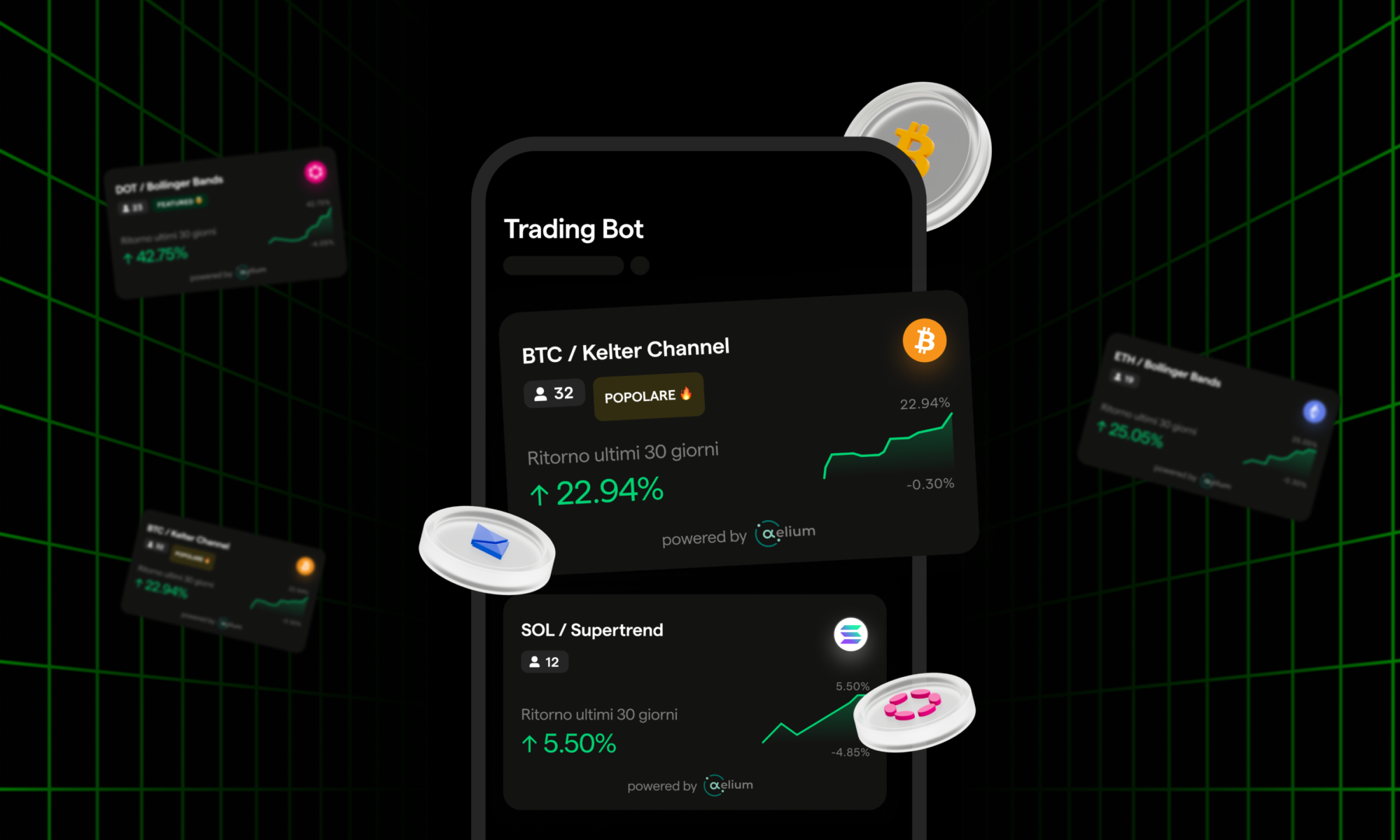
Smart Trades, the automatic trading strategies, are coming to Young Platform! They are available as a preview for Club members only.
We are happy to announce the launch of a new feature: Smart Trades. This feature was created through a partnership with Aelium, a company specialising in developing cryptocurrency trading strategies. Smart Trades can only be activated in advance by Young Platform Club members. In this article, we will learn what they are, how they work, and what advantages they offer for your cryptocurrencies.
Managing money: a question of time
Many of us feel we have no time. We would like to devote attention to many essential or enjoyable things, but time always seems in short supply. Managing money is one of them.
Understanding financial concepts helps to set and achieve concrete goals, contributing to present and future financial security. It gives peace of mind, opens new opportunities and avoids uncontrolled debt. Developing one’s savings and investment skills increases independence and quality of life.
We firmly believe that the crypto market represents a new opportunity, and our job is to make it available to as many people as possible.
We have always tried to develop tools that are simple and as automated as possible, capable of working even with minimal amounts of money and little time. This way, anyone can try, experiment, and adapt the tools to their situation. Flexibility is our prerogative. We break down any barriers and encourage individual autonomy, starting from the heart of the problem: time.
Buy-and-Hold and Smart Trades compared
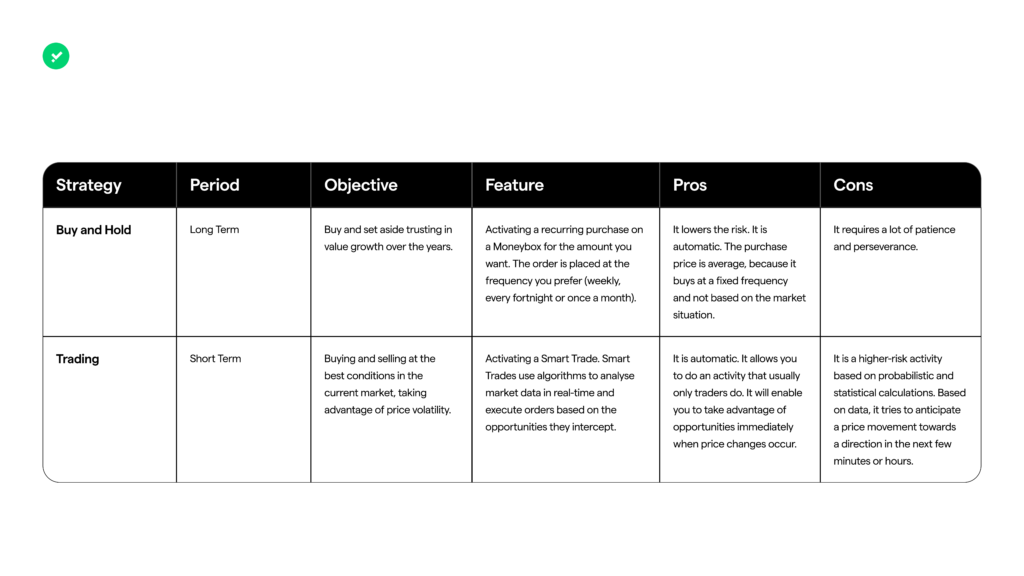
Today, we want to introduce you to a new tool that complements the Moneyboxes. These were created to automate the buy-and-hold approach over the long term. Buy and Hold isan approach that does not consider price fluctuations and volatility and tries to put cryptocurrencies aside over the years on an ongoing basis. The recurrence of purchases over the long term limits risk and the average purchase price.
The completed approach to Moneyboxes, which we want to tell you about today, is the one introduced by Smart Trades. If Moneyboxes are for ‘buying and saving,’ Smart Trades are for trading. They are, therefore, short-term indicators that execute buy-and-sell trades automatically. Smart Trades seek to exploit volatility, price trends, and breaks in support and resistance to their advantage to achieve results over weeks or months, even if they entail higher risk.
But now, let’s get into the nitty-gritty of Smart Trades to learn what they are, how they work, and what benefits and risks they entail. Above all, we must know how to harness them to achieve our goals.
Remember, the definitions provided here are greatly simplified for a non-expert audience. If you wish to delve deeper into the indicators, we recommend reading the in-depth articles on Academy. It’s crucial to understand that financial markets are intricate and unpredictable, and an indicator’s performance can fluctuate based on numerous factors. Before you proceed, consider your risk profile, investment goals, and time horizon. Also, avoid basing your decisions on a single source of information and always seek advice from a professional who can guide your choices. This table provides some information that may aid your research. But always keep in mind: the final decision is always yours!
What are Smart Trades
Smart Trades are automatic trading indicators that operate without human intervention thanks to an algorithm.
This algorithmic trading type uses mathematical models to execute buy and sell orders based on market signals and predefined parameters. With Smart Trades, even beginners can approach trading.
Algorithmic trading: how it works
Algorithmic trading can execute various trading orders at a higher speed than manually. These systems are programmed to recognise trends, patterns and price discrepancies. Based on this data or signals, they execute fast trades to maximise returns.
An algorithm in trading is a detailed recipe that tells the computer exactly what to do and when. For example, ‘Buy 100 shares of XYZ Corporation when their price falls below 50€ and sell them when their price rises above 60€’. The computer monitors the market 24 hours a day, 7 days a week, and automatically executes these orders when the specified conditions occur, without you constantly tracking the market.
Why activate a Smart Trade?
Activating a Smart Trade offers numerous advantages, especially for beginners. It is a gateway to the trading world that does not require years of experience or constant market monitoring. Smart Trades reduce the emotional factor, one of the biggest obstacles for traders, and allow a more disciplined, data-driven approach. In addition, they will enable you to take advantage of market opportunities 24 hours a day, 7 days a week.
How to Choose a Smart Trade
Before activating a Smart Trade, it is important to carefully evaluate each strategy, understand the associated risks, and determine which best aligns with your objectives. The app describes each strategy’s characteristics, and you can read the complete guide to help you interpret and use them in your choice.
How Smart Trades are activated
Activating a Smart Trade on the Young Platform is simple and intuitive. They are currently only available on the Young Platform app, not the web version. After selecting the strategy that best suits your needs, follow this step-by-step tutorial. Simply enter the amount to be allocated and check the summary data before confirming. Once configured, the Smart Trade will start trading automatically, allowing you to monitor progress and make necessary changes. For more details on the functionality, please read our Terms and Conditions and Aelium’s Terms and Conditions.
Smart Trades available on Young Platform
Each of the four proposed strategies works on different parameters. You can read the Academy’s in-depth article on a strategy by clicking on it in the following list:
Keltner Channels
Supertrend
Momentum
Bollinger Bands
Cryptocurrencies available for Smart Trades
The cryptocurrencies available for use with Smart Trades include some of the most popular and liquid ones on the market:
This selection of cryptocurrencies allows diversifying one’s strategies across different assets, taking advantage of each coin’s unique characteristics.
Smart Trade Monitoring
To monitor the gains and losses of your Smart Trades, access the ‘Smart Trades’ section of the app. In the ‘Active’ tab, find and select the strategy of interest to view the details. Here, in the Profit&Loss (P&L) section, you can analyse the performance of your plan, checking the percentage increase or decrease and the amounts gained or lost. If you wish to increase your budget, you can easily do so by using the ‘Add Funds’ button on the same detail screen. By following these simple steps, you can actively manage and monitor the effectiveness of your automatic trading strategies on the platform.
Smart Trades that can be activated
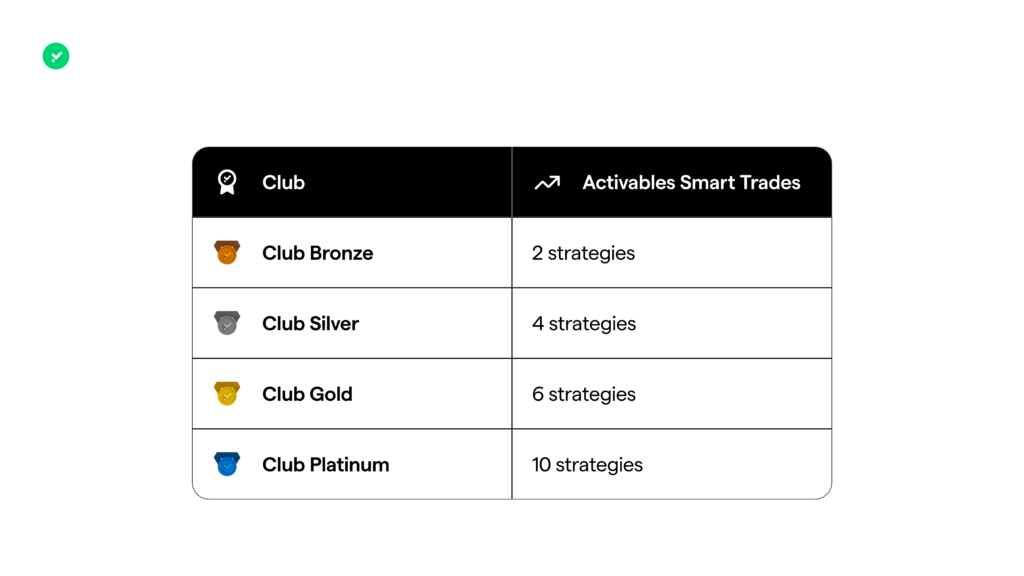
Smart Trades can only be activated in advance for Clubs. If you do not belong to a Club, you can only activate one Smart Trade at a time, but by joining a Club, you can unlock many more.
The availability of these strategies varies according to Club membership.
What fees are applied to Smart Trades?
During the preview period for Club members, a fixed commission of 0.2% will be charged on the transaction amount. Please note that fees may change once the feature becomes available to the public. It’s important to mention that no commission discounts will be applied to Smart Trades, including those offered by the Club subscription or acquired bonuses.
Young Platform does not provide tax, investment, or financial services and advice. The information on this website is provided for informational purposes only. It is presented without regard to any specific investor’s investment objectives, risk appetite, or financial circumstances and may only be suitable for some investors. Buying and selling cryptocurrencies involves risks, including total loss of capital. Users should always research, consult a qualified professional before deciding, and carefully assess their risk profile and loss tolerance.
Smart trades are algorithmic trading strategies. This article will examine the types available on Young Platform and how they work.
Algorithmic trading in brief
Imagine algorithmic trading as the use of an autopilot for trading. Just like the autopilot of a plane or Tesla, it follows precise instructions to take us to our destination. In algorithmic trading, software acts according to well-defined rules (the algorithm) to buy or sell assets such as stocks, bonds or cryptocurrencies. Smart trades work this way, thanks to their algorithms.
The advantages of algorithmic trading
The main advantage lies in eliminating emotional and psychological influences that determine human decisions, using a cold, logical approach to data instead. Unlike us, the algorithm never rests: it scans the data and the market 24/7, even while we sleep.
Algorithmic Trading on Young Platform
The algorithm, in itself, acts according to rules. Each algo-trading strategy available on Young Platform has its specific algorithm, built on an ‘indicator’.
Indicators work like ‘sensors’ that try to understand what will happen once they have analysed the data. Based on the result, the algorithm executes a buy or sell order. It is essential to remember that indicators analyse statistical trends and are therefore not infallible. This is because the market is unpredictable, and no one, not even mathematics, can predict the future.
Smart Trades available
Let’s, therefore, take a look at the strategies available on Young Platform and their respective indicators:
NB. The following definitions have been greatly simplified to make them accessible to a non-expert audience. To explore the indicators, please read the in-depth analyses of the Academy below. Also, remember that the information below, including that in the summary tables, is not a magic formula. Financial markets are complex and unpredictable, and the performance of an indicator can vary depending on many factors.
Before proceeding, consider your risk profile, investment objectives and time horizon. Also, do not base your decisions on a single source of information; always consult a professional who can help you base your choices. In this table, you will find some information that may help you research. But don’t forget: the final decision is always yours!
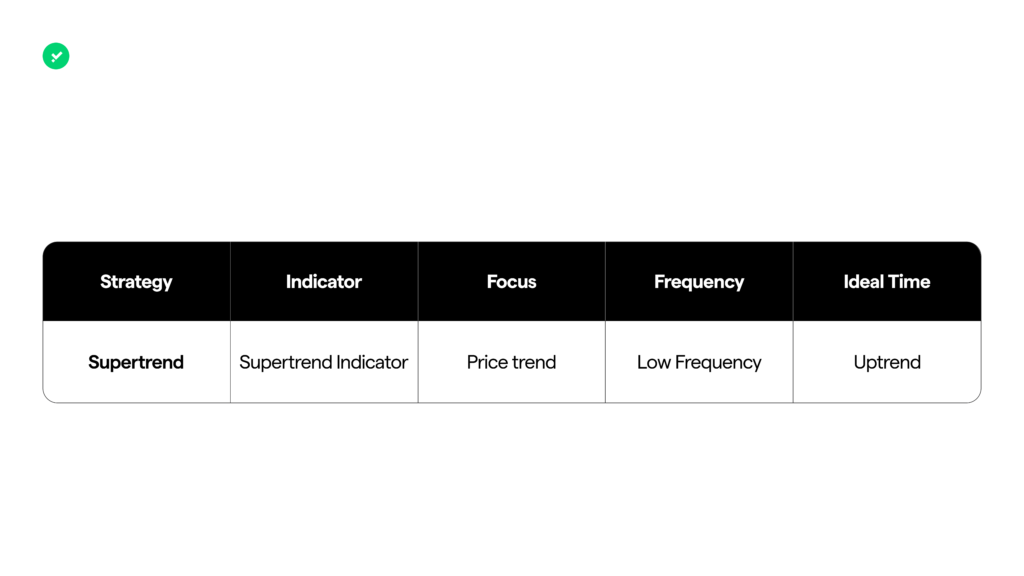
Supertrend
This strategy takes its name from the indicator on which it was built: the Super Trend Indicator. In a nutshell, it works on short-term volatility by trying to identify price trend reversals.
A trend reversal, also called a price reversal, is a change in the direction of prices. The prices of a specific asset are hitherto oriented in a particular direction, and they change direction. There are downward reversals and upward reversals. The trend changes from positive to negative in the first case, while the opposite occurs in the second case.
The dedicated guide includes other ranking parameters to help you assess whether this strategy is right for you.
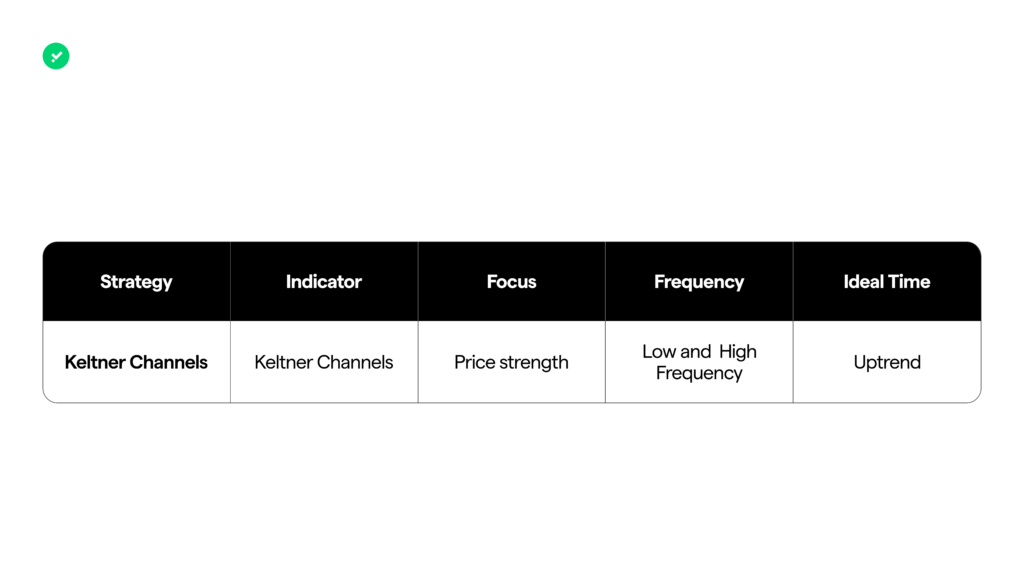
Keltner Channels
The Keltner Channel was first introduced by Chester Keltner in the 1960s. This indicator mainly studies price strength.
The Keltner Channels help identify potential entry and exit points in an upward market. They tend to work best in high volatility, i.e., when an asset’s price moves steadily. Conversely, if the price remains stable, it may suggest a less volatile or consolidating market.
The dedicated guide includes other ranking parameters to help you assess whether this strategy is right for you.
Momentum
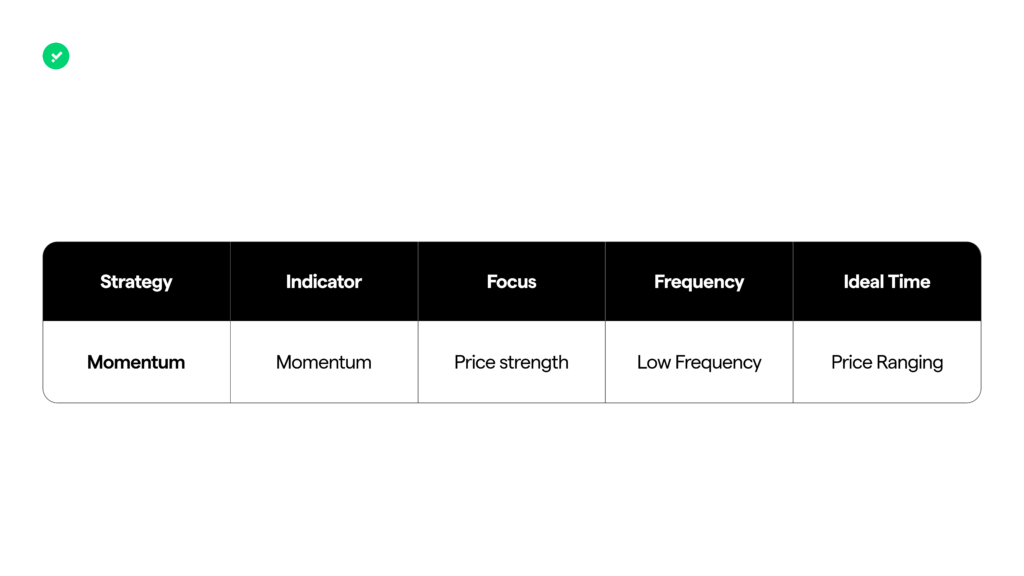
This indicator is a tool that helps analyse markets to understand whether the price of an axis is getting stronger or weaker. It tells us whether the price is rising rapidly, falling, or changing slowly. This indicator mainly uses two indices: the Relative Strength Index (RSI), which helps to tell if a stock has been bought or sold too much compared to its ‘normal’ value, and the Moving Average Convergence Divergence (MACD), which shows if the price trend of an asset is changing.
The dedicated guide includes other ranking parameters to help you assess whether this strategy is right for you.
Bollinger Bands
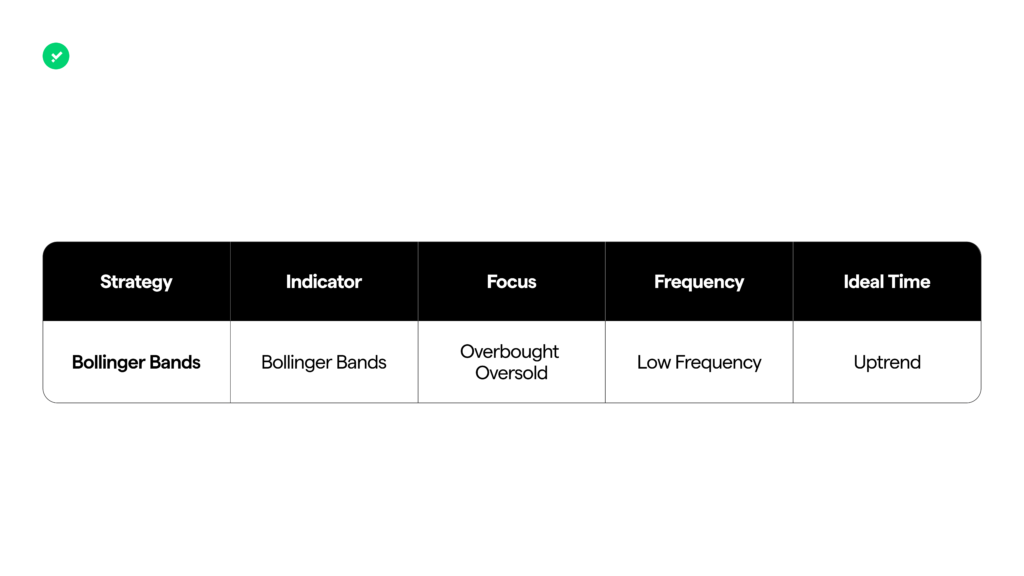
The Bollinger Bands strategy, named after its indicator, operates based on ‘buy walls’ and ‘sell walls’. It comes into play when the price enters an ‘overbought’ or ‘oversold’ zone.
In the first case, a cryptocurrency is traded at a price the index evaluates as higher than the “fair” price. Therefore, it is expected that the market will correct shortly, and consequently, there will be a decrease in the value of the cryptocurrency. In the second case, the index believes that the cryptocurrency is traded at a price below its “fair” value. Thus, it is likely that the price will bounce back up.
Other classification parameters in the dedicated guide can help you evaluate whether this strategy is right for you.
How to activate a strategy on Young Platform
Now that we have identified one or more strategies suited to our needs, it is time to get into the swing of things and follow the step-by-step tutorial to activate them. We have devoted an article to the Smart Trades activation guide. In addition, you can read the article on Frequently Asked Questions about Smart Trades.
Young Platform does not provide tax, investment or financial services and advice. The information on this website is provided for informational purposes only and is presented without regard to any specific investor’s investment objectives, risk appetite, or financial circumstances. It may not be suitable for all investor users. Buying and selling cryptocurrencies involves risks, including total loss of capital. Users should always research, consult a qualified professional before deciding, and carefully assess their risk profile and loss tolerance.
Buy and Hold is a widely used long-term approach. It is based on the belief that, despite market volatility, the value of cryptocurrencies will tend to increase in the long run. Think, for example, of someone who bought Bitcoin five years ago and has yet to sell it, hoping for further appreciation.
Buy and Hold: General Considerations
Buy and Hold is a particularly suitable approach for beginners because it does not require excessive analysis skills or in-depth knowledge of market dynamics.
On Young Platform, we have developed a feature to use this approach: Moneyboxes. To be able to activate them, these are the elements you need to bring with you:
a lot of patience
a budget to be allocated on a weekly or monthly basis
a basic grounding in the options available
For this last point, please refer to the end of the article.
Each approach has peculiarities that, aligned to the specific needs of each, can turn into significant advantages. Let us take a closer look at the conditions under which Buy and Hold can be particularly suitable:
when one has little time or knowledge in the field
when you can set aside a budget regularly (the minimum is 20€ in the case of Young Platform operations)
one has an anxious, emotional or high-stress personality
one is not too familiar with the use of applications or web platforms
you do not want to achieve goals in the immediate term, but you are thinking of achieving results in the long term
one does not know the charts well and finds it hard to understand what is the best price to buy and when is the best time to buy
Advantages of the Buy and Hold Approach
Less emotional impact
One of the most challenging aspects of buying cryptocurrencies is managing emotions. Market volatility can often lead to hasty decisions based on panic or euphoria. Buy and Hold reduces this emotional stress, as the user does not have to worry about daily market fluctuations.
Long-term benefit
Historically, many cryptocurrencies have shown a long-term appreciation trend. People who bought Bitcoin or Ethereum in their early years and held the position have often seen strong results. Of course, we know that ‘what has been‘ is no guarantee of ‘what will be’. However, looking at a chart that photographs the performance of a cryptocurrency from its inception to the present can help us understand whether a long-term approach has the best chance. This means the answer is ‘yes’ for one cryptocurrency and ‘no’ for another.
Simplicity of management
Unlike active trading, which requires constant attention and analysis of the market, the buy-and-hold approach is relatively simple to manage. Once the repetitiveness of buying is set, the user only has tomonitor the market occasionally.
Reducing transaction costs
Each transaction may involve costs, such as buying and selling commissions. The buy-and-hold approach minimises the number of transactions, thus reducing the associated costs.
Flexibility of market entry
Systematic hoarding, also known as Dollar Cost Averaging, allows users to enter the market at an average cost, reducing the risk of buying large amounts of cryptocurrency at an unfavourable time.
More excellent protection against short-term volatility
By holding cryptocurrencies for an extended period, users are less exposed to the inevitable short-term market fluctuations, which can often be drastic.
How to apply this approach
Young Platform has developed an ad hoc section for this type of user: Moneyboxes.
Each Moneybox comes with a powerful tool: recurring purchases.
The recurring purchase is an automatic order executed according to our chosen settings.
There are three parameters to be entered:
The budget
Frequency
The cryptocurrencies we are interested in
Choice of budget
The easiest way to decide on a budget is, for example, to analyse our expenses monthly. How much can we put aside? And how much of this budget do we want to convert into cryptocurrencies?
All that remains now is to decide how to load the budget into our account: by credit card, debit card, prepaid card or bank transfer. Follow the deposit guide for a complete tutorial on the procedure.
NB. When setting the recurrence of the deposit, make it a few days earlier than the one you set for the Moneybox.
Frequency
Once the budget has been established, all that remains is to ‘unpack’ it into several purchases. The choice can fall on:
1 purchase per month
1 purchase every fortnight
1 purchase per week
The choice will also depend on the size of the budget. For example, if it is 1,000€ per month, I may consider splitting it into several purchases so that the average purchase price is well spread over the 30 days.
Essential preparation on available options
Three types of Moneyboxes are available on the Young Platform. Each includes one or more cryptocurrencies, and knowing what we buy is essential. For an informed choice, it is crucial to learn more about the characteristics of each cryptocurrency, such as its history, market positioning and potential applications.
The Curated Bundle
These are Moneyboxes already diversified by market area:
Popular: these are the most popular cryptocurrencies among members of the Young Platform community. Inside, you will find:
Metaverse is an online virtual environment where users interact in shared experiences. Inside, you will find cryptocurrencies that belong to projects in the Metaverse:
Web3 is the third evolutionary phase of the internet, characterised by blockchain-based economic and technological systems. Here, you will find the cryptocurrencies that collaborate in the construction of Web3:
To purchase an individual cryptocurrency, simply select one from the menu. To explore the various projects, scroll down the Markets page of our site and, by clicking on a cryptocurrency’s name, read more about it. Before making any transactions, conducting thorough research and analysis is essential, assessing each cryptocurrency’s characteristics.
The Bespoke Bundle (2 to 5 crypto)
You can create a customised and diversified Moneybox using the’ Markets’ page to discover the various cryptocurrencies. This section lets you learn more about the available projects and their characteristics. However, conduct in-depth research on each cryptocurrency before including it in your Moneybox.
Young Platform does not provide tax, investment or financial services and advice. The information on this website is provided for informational purposes only. It is presented without regard to any specific individual’s objectives, risk appetite or financial circumstances and may only be suitable for some Users. Buying and selling cryptocurrencies involves risks, including total loss of capital. Users should always research, consult a qualified professional before deciding, and carefully assess their risk profile and loss tolerance.